
PRODUCT KNOWLEDGE
How to Choose Flooring for Your Home
The authorised, edited Chinese-language illustrations are conceptual references, not specifications for Kunsun products. Confirm emissions, heating compatibility and refinishing limits for the exact model.
Five common flooring types: construction, benefits and buying tips
Colour and grain matter, but everyday performance depends on much more: board construction, wear-layer thickness, indoor humidity, installation and underfloor heating. Before comparing products, consider your budget, how long you plan to live in the home and how much maintenance you are comfortable with.
This guide covers five names commonly used in the Chinese market. “New three-layer” and “pure three-layer” are sales terms whose meaning can vary between brands. In international specifications, several of these products fall under engineered wood flooring. Always check the actual cross-section and product documentation.
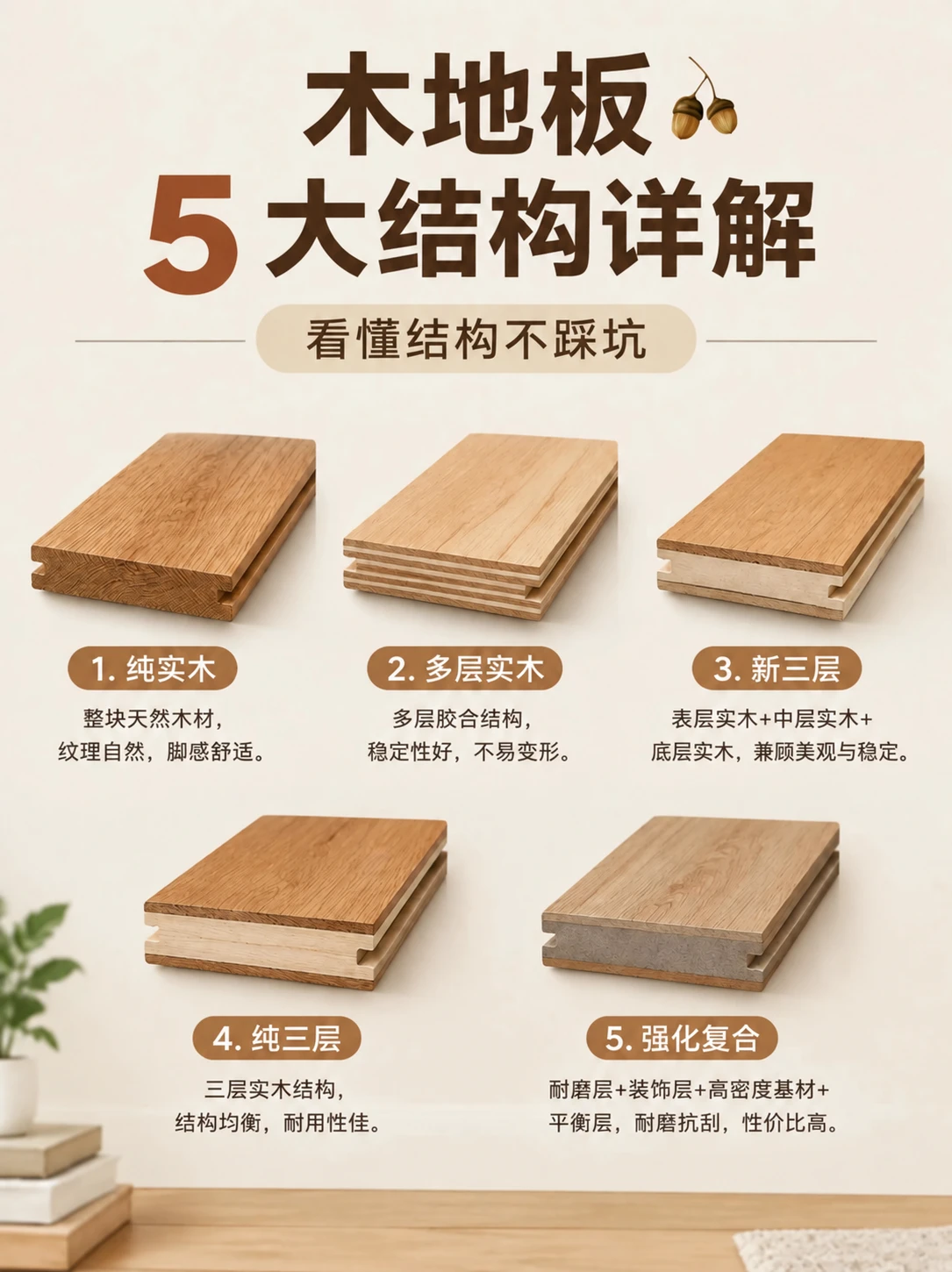
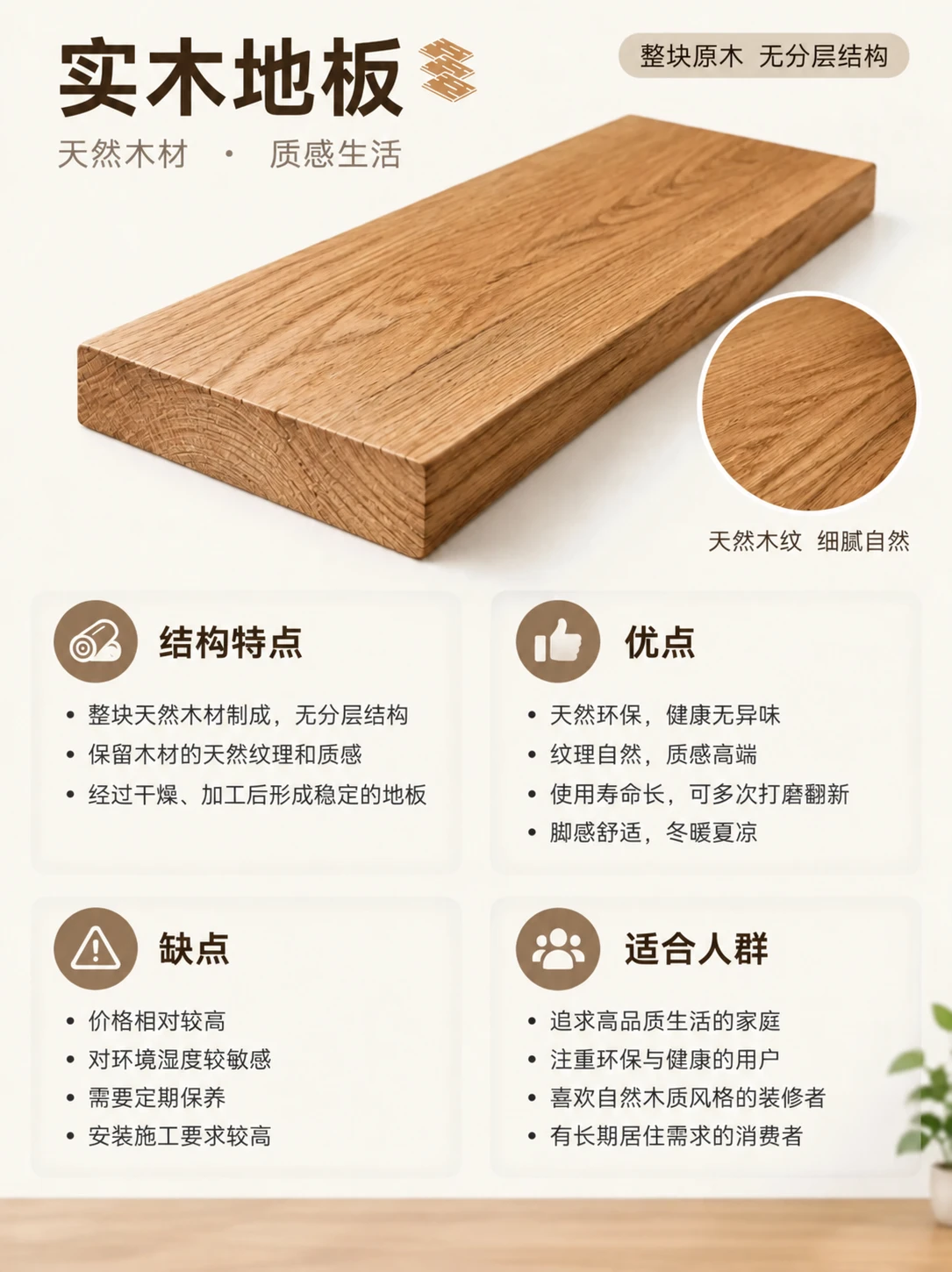
1. Solid wood flooring: natural character with careful maintenance
Solid wood boards are machined from a single piece of timber, retaining the wood’s natural grain and texture. Suitable floors can be sanded and refinished, although the remaining sandable thickness, tongue-and-groove position and condition determine what is possible.
Benefits:** distinctive natural grain, a warm wood feel and potential for repair and refinishing.
Trade-offs:** prices are often higher, and the boards respond to changes in moisture and temperature. Prolonged water exposure, excessive dryness or unsuitable installation can cause gaps, cracks or movement. A solid timber board does not mean the finished flooring and installation are entirely adhesive-free or emission-free.
Best suited to:** households that value natural wood and can maintain appropriate indoor conditions.
Check before buying:** species, moisture content, finish, stability and installation requirements. For underfloor heating, choose only a specific product approved by its manufacturer, with suitable installation and warranty conditions.
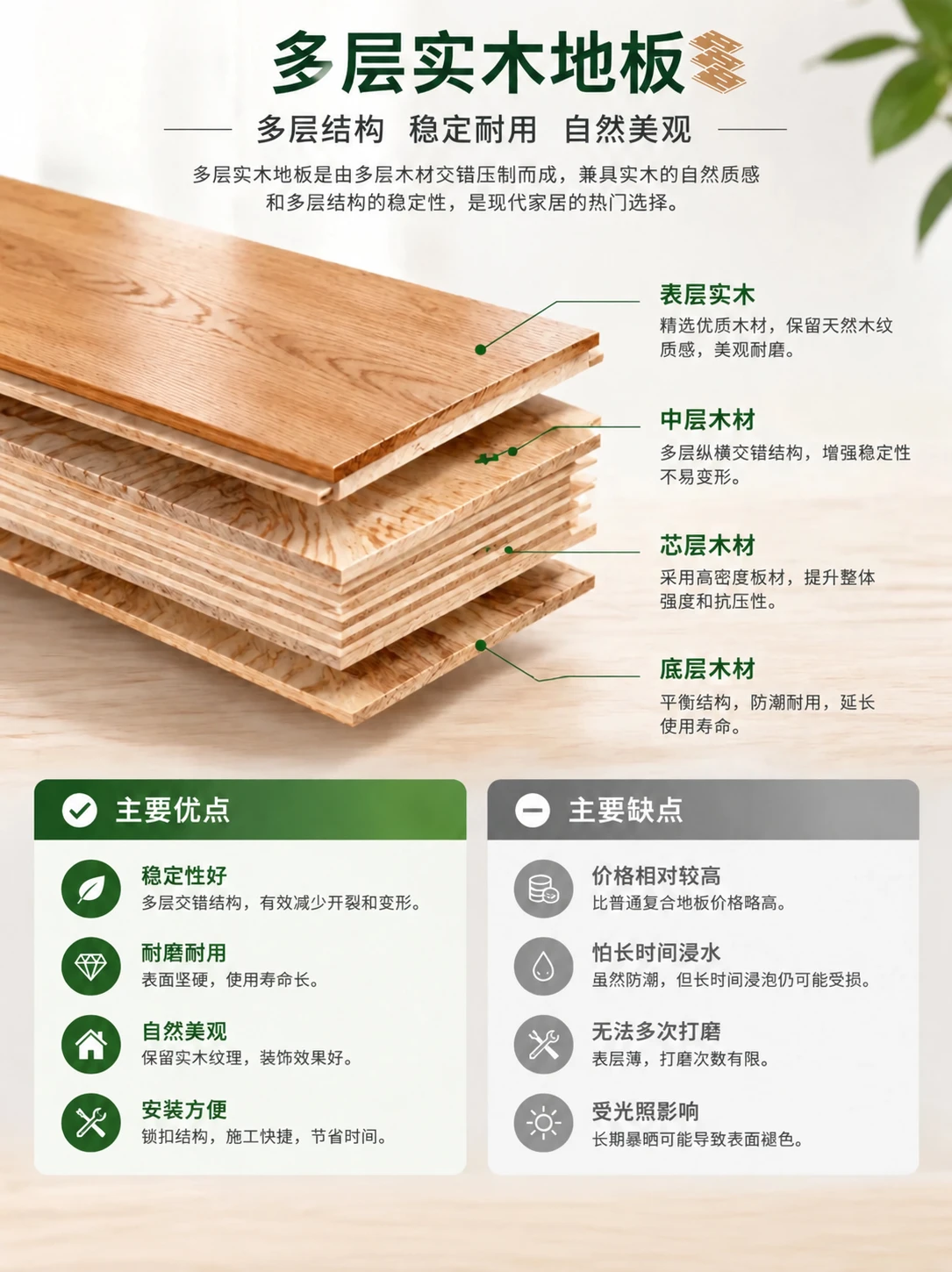
2. Multi-ply engineered wood flooring: balancing wood appearance and stability
These floors typically combine a natural wood surface with a cross-laminated wood substrate. Alternating grain directions help reduce movement associated with timber’s directional expansion and contraction.
Benefits:** a real wood surface, generally better dimensional stability than comparable conventional solid boards, and a broad range of price options.
Trade-offs:** prolonged soaking can still damage the floor. Thin-faced products may not support a full sanding and refinishing process; thicker-faced products need individual assessment.
Best suited to:** homeowners seeking a balance between natural appearance, budget and stability. For heated floors, select an explicitly approved product.
Check before buying:** actual face-layer thickness, substrate construction, bonding quality, finished-product emissions reports, moisture requirements and joint quality. Adhesive claims alone are not sufficient evidence of the finished floor’s emissions performance.
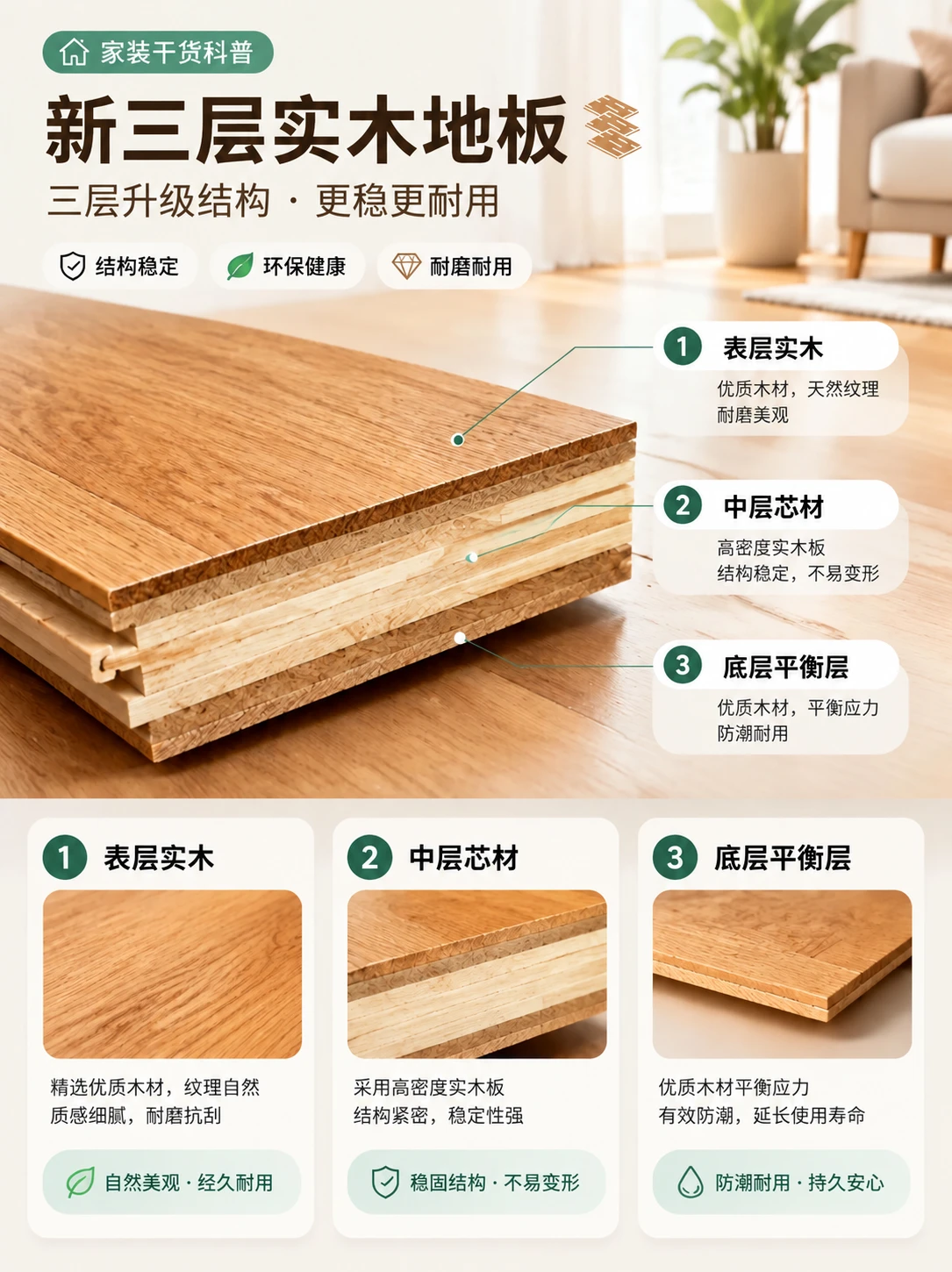
3. “New three-layer” flooring: check the construction behind the name
The term does not identify one universal construction. Brands may use different combinations of surface, core and backing materials.
Benefits:** some products offer a natural wood surface and a stable construction at an accessible price.
Trade-offs:** the name alone does not prove lower adhesive use, lower emissions or greater durability. Surface thickness, core material and manufacturing quality influence performance and refinishing potential.
Best suited to:** buyers who want a wood surface within a controlled budget and are willing to compare technical details.
Check before buying:** ask for the material and thickness of every layer. Establish whether the core uses solid wood strips, plywood or another wood-based material. Heating compatibility and sanding limits should be confirmed in writing for the exact product.
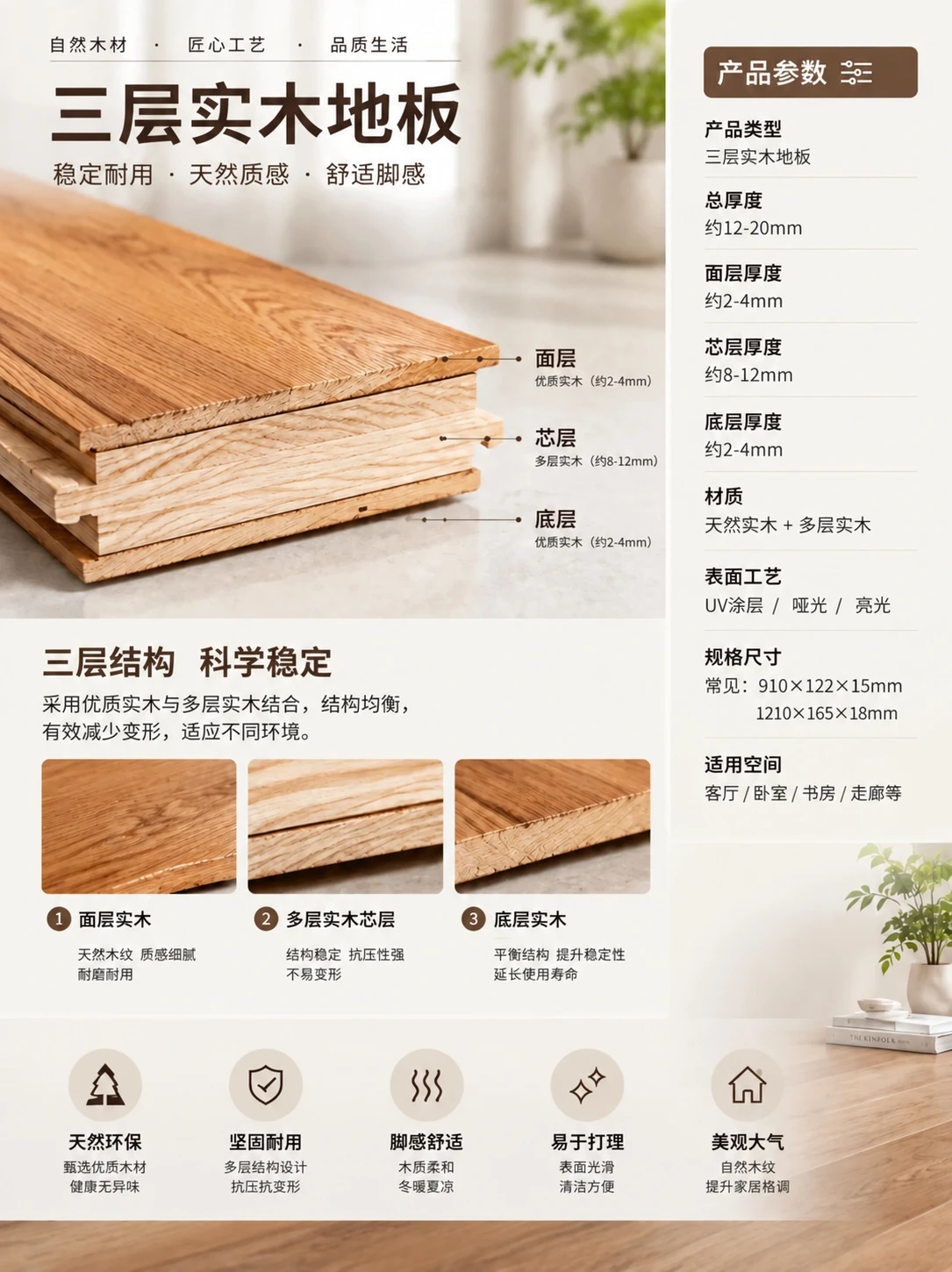
4. Three-layer engineered wood flooring: focus on the wear layer and long-term value
A typical construction combines a natural wood face, a cross-oriented solid wood core and a backing layer, bonded together. The Chinese sales term “pure three-layer” does not mean the product contains no adhesive.
Benefits:** natural wood character with dimensional stability. Products with a sufficiently thick face layer may offer useful repair and refinishing potential.
Trade-offs:** face thickness, core quality, machining and finish vary significantly. Premium products can cost more. Fewer layers do not automatically mean better quality or lower emissions.
Best suited to:** long-term owner-occupied homes where buyers value natural wood and are willing to invest in suitable construction and workmanship.
Check before buying:** face-layer thickness, layer materials, joint precision, finish maintenance, testing and warranty terms. For underfloor heating, verify compatibility of the complete flooring and installation system.
5. Laminate flooring: a practical choice for wear resistance and budget
Laminate typically combines a wear layer, a printed decorative layer, a wood-fibre core and a balancing layer. Its wood appearance comes mainly from the decorative layer rather than a natural wood face.
Benefits:** a broad price range, typically good surface wear resistance and straightforward everyday cleaning.
Trade-offs:** the feel differs from real wood, and sanding cannot restore the printed surface. Wear resistance is not complete scratch immunity, and moisture resistance does not mean the floor can remain submerged.
Best suited to:** budget-conscious households, rental properties and busy homes where low maintenance matters. Commercial premises require an appropriate use classification.
Check before buying:** use classification, abrasion rating, core quality, finished-product emissions reports, joints and moisture performance. Some laminate products are compatible with underfloor heating when installed with the specified underlay and system; laminate should not be ruled out categorically. Reference: Quick-Step heating guidance
Choosing the wood face: black walnut, red oak and white oak
Black walnut, red oak and white oak are common and popular choices for natural wood flooring faces. Compare them alongside your furniture, wall colours and lighting rather than choosing by species name alone.
- Black walnut: typically offers deeper natural tones and expressive grain, making it a useful option for interiors with rich, darker wood accents.
- Red oak: typically has warmer light-brown to reddish-brown tones and pronounced grain, complementing warm, natural interiors.
- White oak: often presents light-brown or beige-brown tones; light or natural finishes can suit a calm, understated interior.
Cut, selection, staining and finish can substantially change the final appearance. Review several physical samples together for knots, colour variation, grain and face-layer thickness. Popularity varies by region and interior style; this is not a market-share ranking.
A quick guide by household priority
| Your priority | Products to compare | Key checks |
| Underfloor heating with a real wood surface | Manufacturer-approved multi-ply or three-layer engineered wood | Exact product, underlay, temperature, humidity and installation |
| Natural wood with refinishing potential | Solid wood or thick-faced engineered wood | Remaining sandable thickness and manufacturer limits |
| Limited budget and easy care | Laminate | Use classification, testing and moisture performance |
| A wood surface at an accessible price | Multi-ply or products sold as “new three-layer” | Actual face thickness and core material |
Questions to ask before ordering
- What is the actual construction? Ask for a cross-section or technical drawing with layer materials and thicknesses.
- Is this exact product approved for my heating system? Confirm the underlay, installation method and operating limits together.
- Can it be refinished? Distinguish sanding from renewing the surface coating. Sanding potential depends on the wear layer, flatness, condition and contractor’s work. Reference: NWFA refinishing guidance
- What supports the emissions claims? Check finished-product reports for the exact model, the applicable standard, report date and testing organisation. Odour and adhesive quantity are not substitutes for testing.
- What does the quotation include? Compare boards, underlay, installation, skirting, trims, wastage and after-sales service.
Follow the selected manufacturer’s temperature limits for heated floors. For example, Kährs specifies a maximum wood-floor surface temperature of 27°C; this is a manufacturer-specific example, not a replacement for other brands’ instructions. Reference: Kährs official guidance
The right floor matches the material to your budget and daily life. Verify the construction and operating conditions first, then choose the colour and grain you enjoy.
Illustration note: the supplied Chinese-language graphics are conceptual references, not specifications or testing evidence for Kunsun products. Their environmental claims, sales terms and example thicknesses should not be treated as universal facts; consult the article and the exact product documentation.