
TECHNICAL GUIDES
The Beauty of Solid Wood Texture Panels
Texture changes the way a wood surface receives light. Instead of relying on colour alone, carved depth, direction and repetition give solid wood panels a shifting character as the viewer moves through a space.
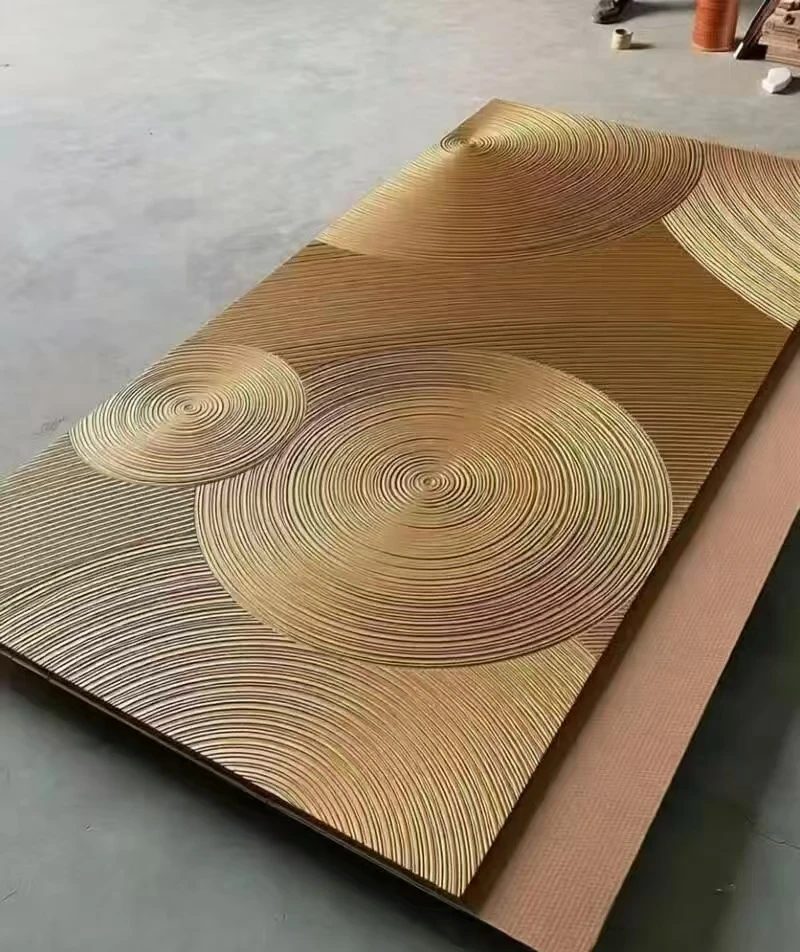
Concentric relief: movement from a single point
Concentric routing builds a field of closely spaced rings. Overlapping circles create focal points and a sense of movement, while the natural colour variation of the wood remains visible between the carved lines.

From toolpath to tactile surface
The workshop photographs show the pattern developing directly under CNC control. Consistent spacing produces rhythm at a distance; seen close up, the small ridges and valleys create a distinctly tactile surface.


Linear and crosshatched textures
Straight grooves can make a surface appear longer and more architectural. Fine crosshatching adds a quieter textile-like character, while a dark finish increases contrast along each carved ridge.


Geometric rhythm through changing direction
Dividing the panel into geometric fields allows one groove profile to produce many light effects. Triangles, diagonals and faceted marks become more or less visible as illumination and viewing angle change.


Design and production considerations
Before production, confirm panel dimensions, timber species, pattern scale, carving depth, edge treatment, finish colour, installation direction and sample approval. Lighting should also be reviewed because grazing light makes relief more pronounced.
Discuss Your Texture Panel Specification
Send the panel dimensions, timber species, pattern, carving depth, finish, quantity and project application.
Contact KUNSUN VENEER →Published: 2026-09-29