
Six Common North American Hardwoods: Species and Comparison
Ash, cherry, white oak, red oak, hard maple and black walnut are common North American hardwood choices for furniture, interior joinery and natural veneer. Select by species identity, grain, moisture and processing requirements rather than colour or hardness alone. These general descriptions do not verify the origin or performance of a particular batch.
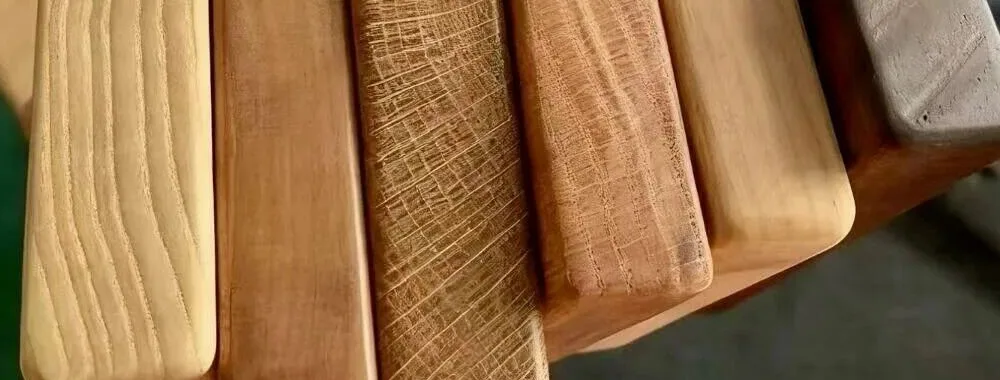
Names and Latin identities
| Trade name | Latin name | Purchasing meaning |
|---|---|---|
| American ash | Fraxinus spp., including Fraxinus americana | Multiple ash species may be traded together |
| American cherry | Prunus serotina | Black cherry; distinguish other cherry trade names |
| American white oak | Quercus spp., mainly Quercus alba | Commercial white oak group |
| American red oak | Quercus spp., mainly Quercus rubra | Commercial red oak group |
| American hard maple | Acer saccharum, Acer nigrum | Do not substitute unspecified soft maple |
| American black walnut | Juglans nigra | Distinguish other walnuts and substitutes |
The abbreviation spp. means multiple species within a genus. Commercial groups are not single botanical species. Specify accepted species, origin documentation and acceptance criteria in the order.
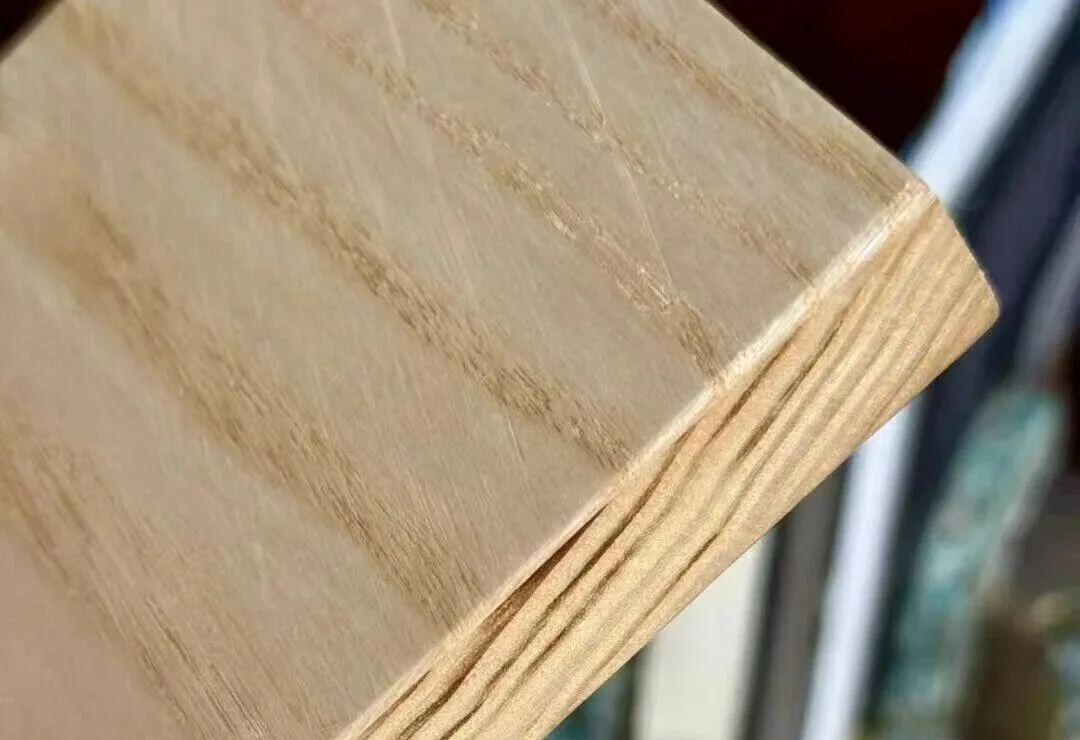
Ash: prominent grain and toughness
Ash commonly has light sapwood and potentially darker heartwood. Its ring-porous structure gives prominent growth-ring patterns; flat cutting tends to show crown figure and quarter cutting straighter grain. Typical uses include furniture, interior joinery, tool handles and bent components. Thin ash veneer expresses appearance but does not transfer solid-wood mechanical properties to a panel. Confirm colour selection, cut and any thermal modification. Untreated ash must not be equated with outdoor-rated thermally modified ash. [1]
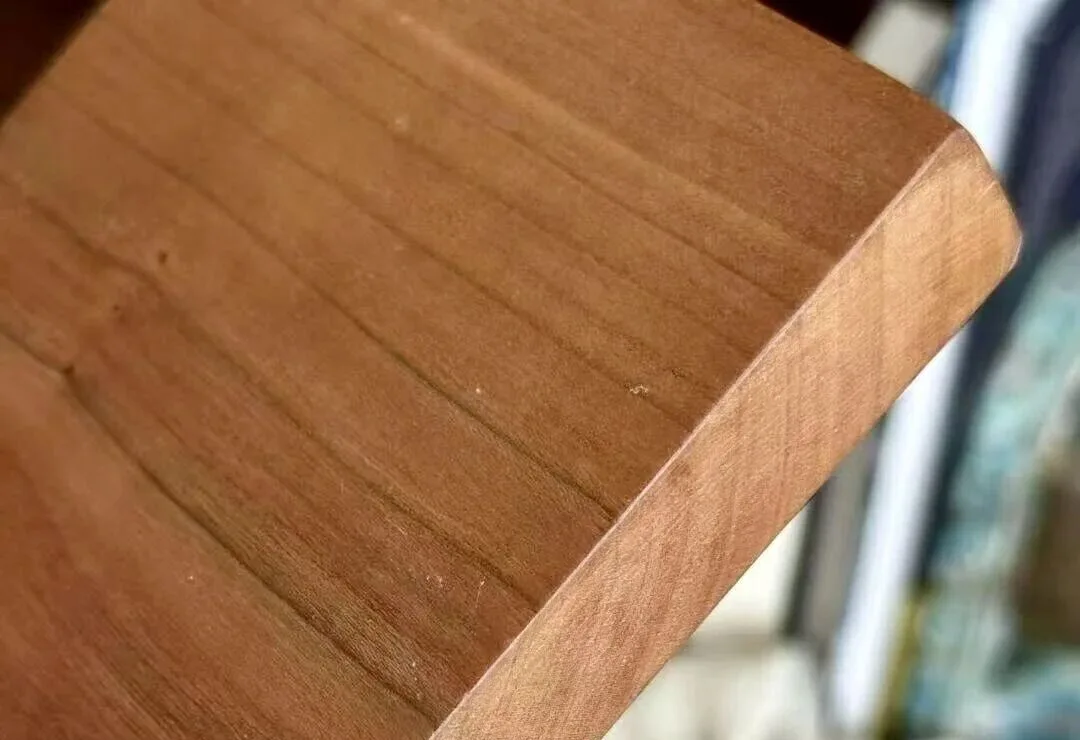
Cherry: fine texture and changing warm colour
Prunus serotina has warm reddish-brown heartwood, lighter sapwood and generally fine texture. It is used for furniture, cabinets, fine joinery and decorative veneer. Light exposure and ageing change its colour; a new sample and an aged installation need not match immediately. Agree heartwood/sapwood allowance, matching and a finished sample. Trial staining before large-scale work. [2]
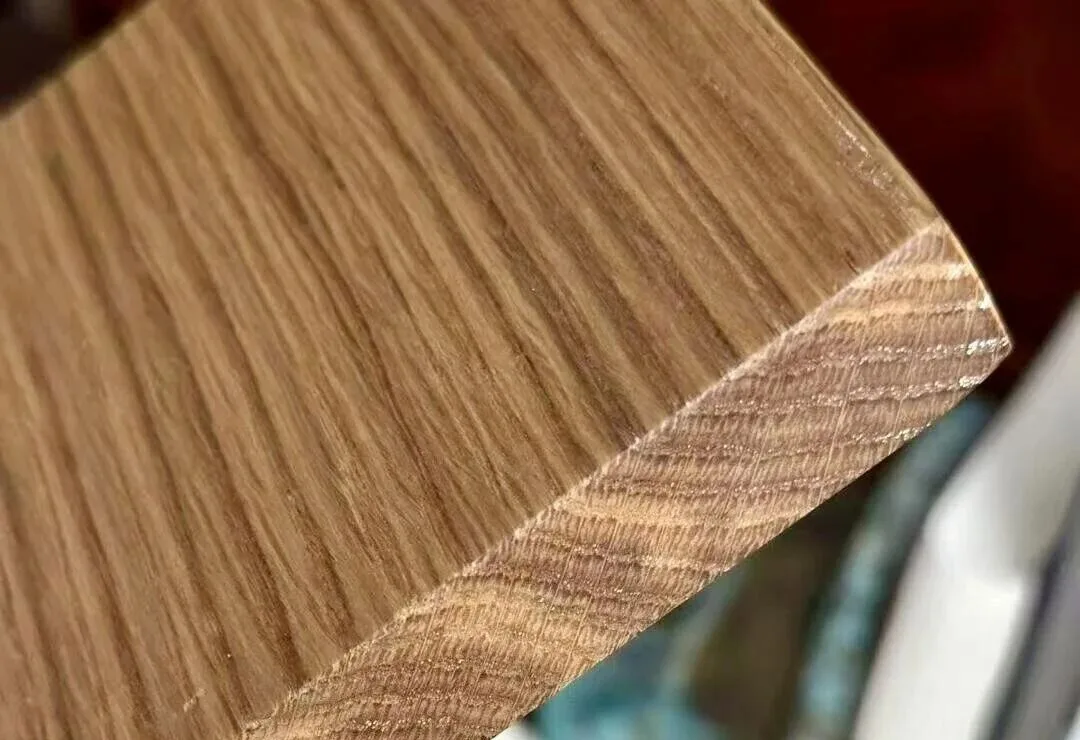
White oak: rays and use limitations
White oak is a commercial group represented by Quercus alba. Prominent rays can produce silver figure on quartered faces. Furniture, flooring, joinery and veneer are common applications. Selected white oak with suitable vessel occlusion can be used for cooperage; this does not make every white oak board or veneered panel waterproof. Drying, grain direction, component width and service humidity still govern movement. Avoid blanket claims that it cannot warp. [3]
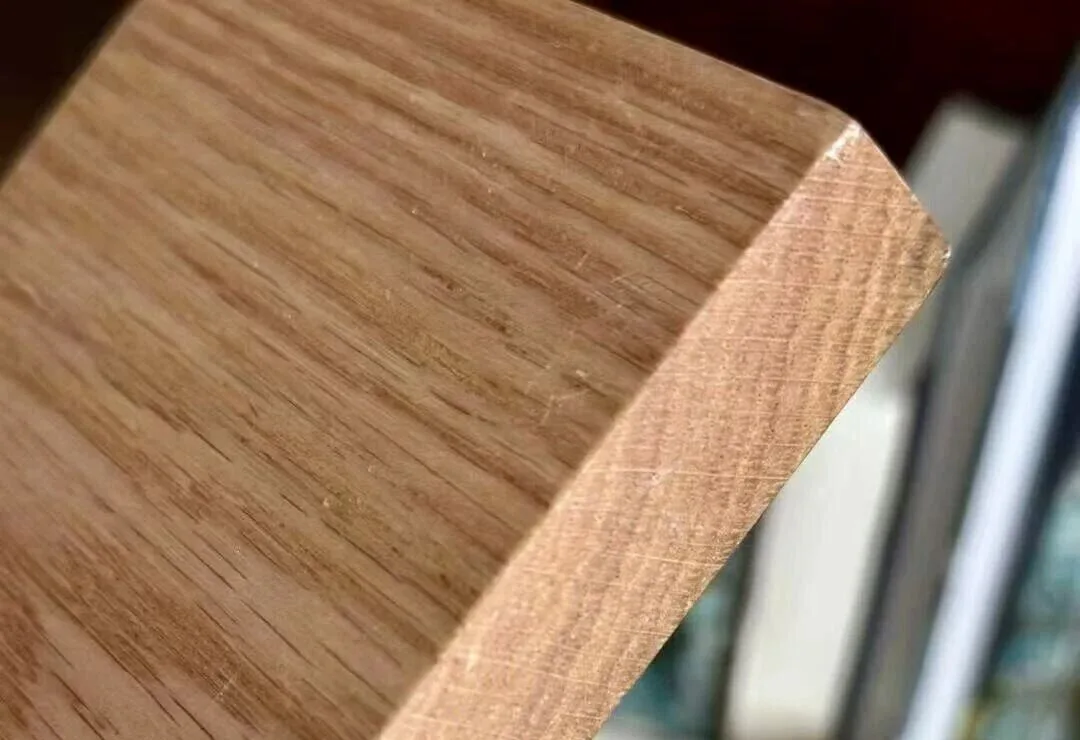
Red oak: open texture for interiors
Red oak is a commercial group represented by Quercus rubra. It is not always visibly red, and its colour overlaps white oak. Its pronounced ring-porous grain suits furniture, floors, stairs and interior joinery. Vessel structure and rays help comparison; colour photographs alone are insufficient identification. Red oak should not automatically replace liquid-tight cooperage white oak. Hardness or wear resistance is not decay resistance. Pore filling changes the finished texture. [4]
Maple: distinguish hard and soft maple
This comparison uses American hard maple: Acer saccharum and Acer nigrum. Fine texture and pale sapwood suit bright interiors; heartwood can be reddish brown. Uses include furniture, cabinets, worktops and flooring, including suitably designed sports-floor systems. Birdseye or curly figure can occur but is not a standard feature of every batch. Soft maple is a separate commercial group and cannot inherit hard-maple hardness values. [5]
AHEC lists hard maple at an average 705 kg/m³ at 12% moisture content, hardness 6450 N and average volumetric shrinkage 11.9% from green to 6% moisture content. These are reference properties, not installation movement predictions or batch guarantees. No separately verified maple close-up was supplied; another pale species or generated grain must not be presented as a genuine maple photograph.
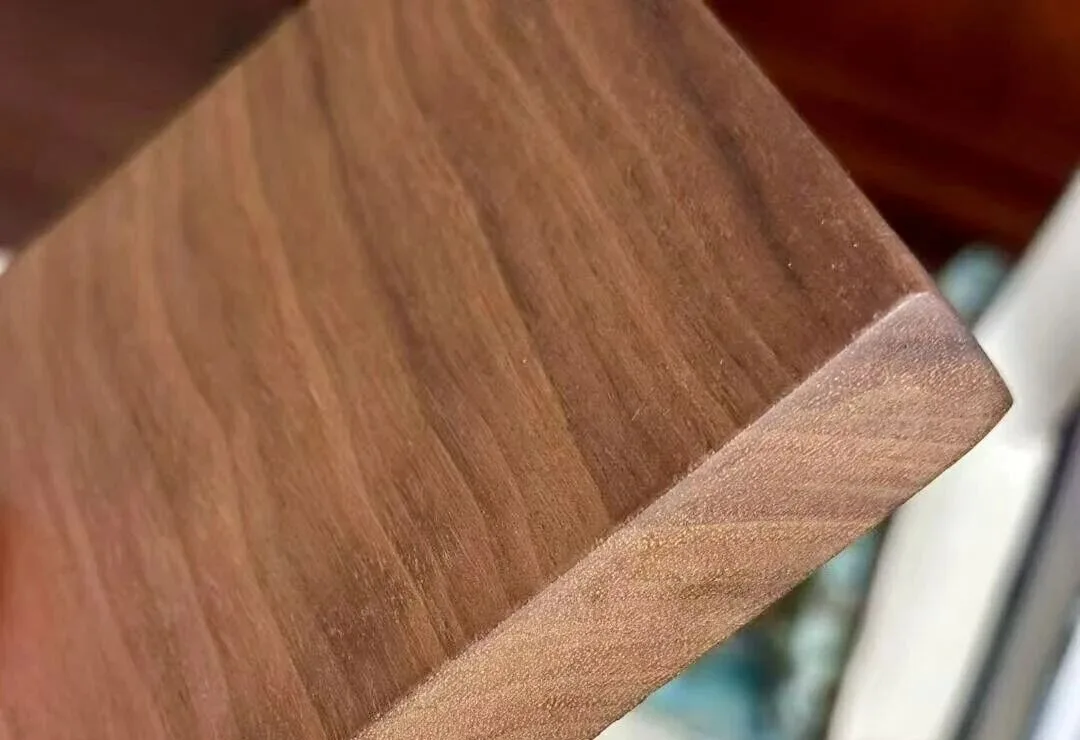
Black walnut: decorative dark heartwood
Juglans nigra has dark brown heartwood that can contrast with pale sapwood. Typical uses include furniture, cabinets, joinery and decorative veneer. Dark colour does not mean it is the hardest of these six woods. Specify allowable sapwood, steaming, staining, colour variation and matching. Steaming may reduce visual heartwood/sapwood contrast, but not every walnut product is steamed. Crown or straight figure also depends on cutting direction. [6]
Choosing by application
| Priority | Compare first | Confirm |
|---|---|---|
| Pale, fine surface | Hard maple | Hard/soft identity, colour, finish trial |
| Pale, prominent grain | Ash, white oak | Colour, cut, rays and matching |
| Warm, fine appearance | Cherry | Ageing and sapwood allowance |
| Natural darker decoration | Black walnut | Sapwood, steaming or staining |
| Open oak grain | Red and white oak | Group identity and pore filling |
No species is best for every application. Solid flooring, flooring wear layers, thin decorative veneer and veneered panels are different products. Panel performance also depends on substrate, adhesive, balancing and pressing; finished flooring depends on construction, surface, installation and environment. A solid-wood hardness value cannot replace finished-product testing.
Frequently asked questions
Can colour identify red and white oak?
Not reliably. Lighting, finishing and cameras alter appearance. Use species records, end-grain examination and professional identification where needed.
Are all hardwoods equally hard?
No. Hardwood is a botanical and trade classification. Hardness comparisons need the test method, units and material scope.
Is volumetric shrinkage furniture movement in use?
No. State the starting and ending moisture contents. A volumetric percentage is not a board-width movement percentage; radial/tangential direction, construction and humidity matter.
What belongs in a veneer specification?
Specify species, thickness, dimensions, cut, grade rules or defect allowances, sapwood, colour variation, agreed moisture and matching. Suppliers' letter grades are not automatically equivalent.
Sources checked 16 November 2026. General selection guidance is not botanical identification, batch testing or certification.
Related material guides
Solid timber, flooring wear layers, thin veneer and veneered panels require checks appropriate to their construction.
Image note
- AHEC — American ash
- AHEC — American cherry
- AHEC — American white oak
- AHEC — American red oak
- AHEC — American hard maple
- AHEC — American walnut
Supplied photographs are truthfully cropped appearance references, not botanical identification or batch tests. Maple information is sourced from AHEC; no generated wood is presented as a photograph.