
8 Common Wood Panel Names: Types, Pros, Cons and Uses
Choose the construction first, then verify service class, surface system and test evidence. No panel wins every comparison of loading, moisture, machining, cost and emissions. Trade names cannot replace product data.
These are eight common market names, not eight separate technical families: “solid-wood particle board” belongs to particleboard. Images illustrate appearance and construction only; they do not certify species, origin, grade or test results.
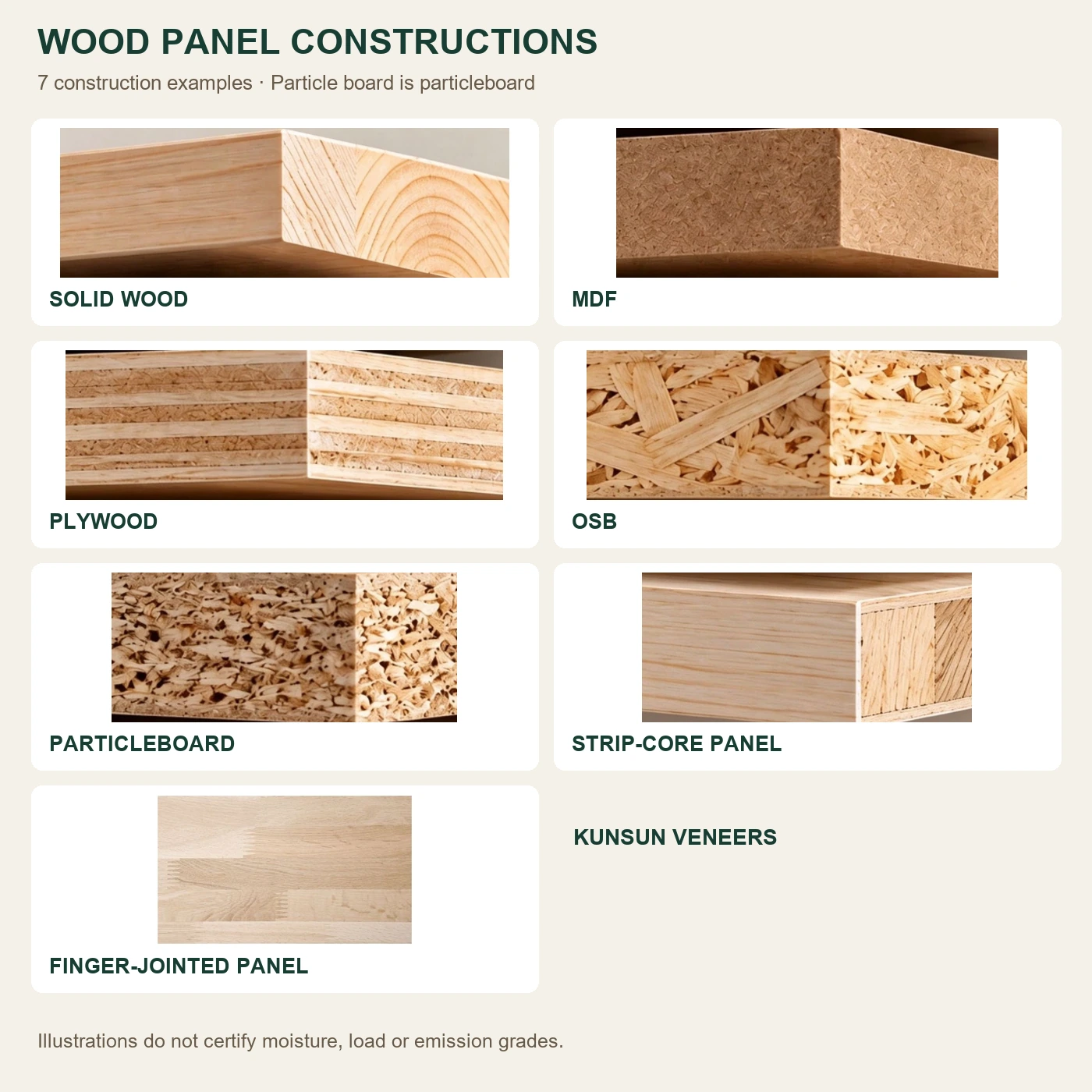
1. Solid wood: continuous natural structure
Solid wood boards are machined from sawn timber and retain grain and natural variation. Here, single-piece boards are distinguished from the finger-jointed and edge-glued panels discussed below; a commercial “solid wood” label alone does not establish the absence of joints or finishes.
Advantages include natural appearance and repairability. Moisture changes cause movement, especially across the grain. Drying, selection and joinery can reduce checking and distortion; cracking is not inevitable. Cost varies with species, grade and size.[1]
Uses and verification:Furniture parts, tops, and purpose-designed doors or flooring. Verify species, moisture content, defects, joints and finish.
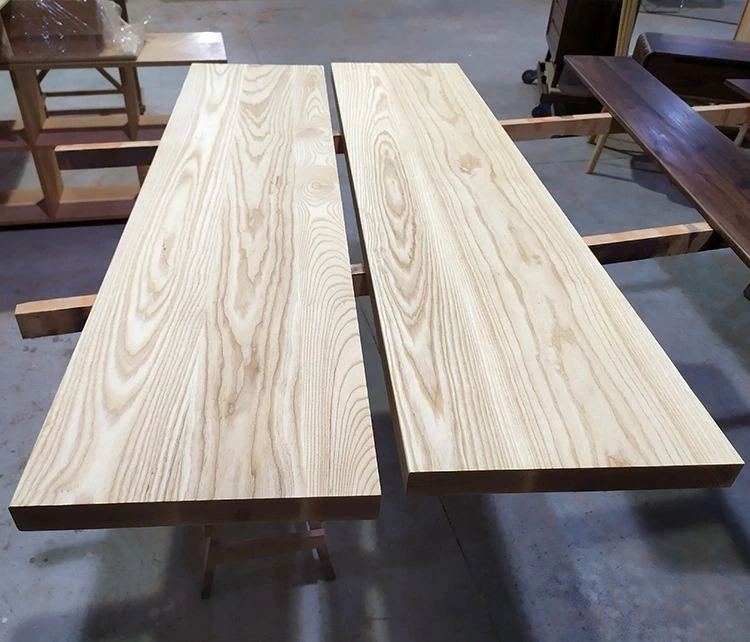
2. Plywood: a layered veneer construction
Plywood bonds wood veneers together, usually with adjacent grain directions approximately perpendicular. The Chinese trade term “solid-wood multilayer board” should be checked against the actual cross-section and product specification.
Cross-lamination restrains in-plane movement relative to parallel-grain timber, but does not eliminate distortion. Veneer quality, lay-up, core defects, bonding and grade govern performance; neither universal waterproofing nor uniformly poor deformation resistance is accurate.[1][4]
Uses and verification:Cabinet components, decorative veneer substrates and interior linings. Structural use requires a suitable rated product and checks on thickness, span, loading and installation.
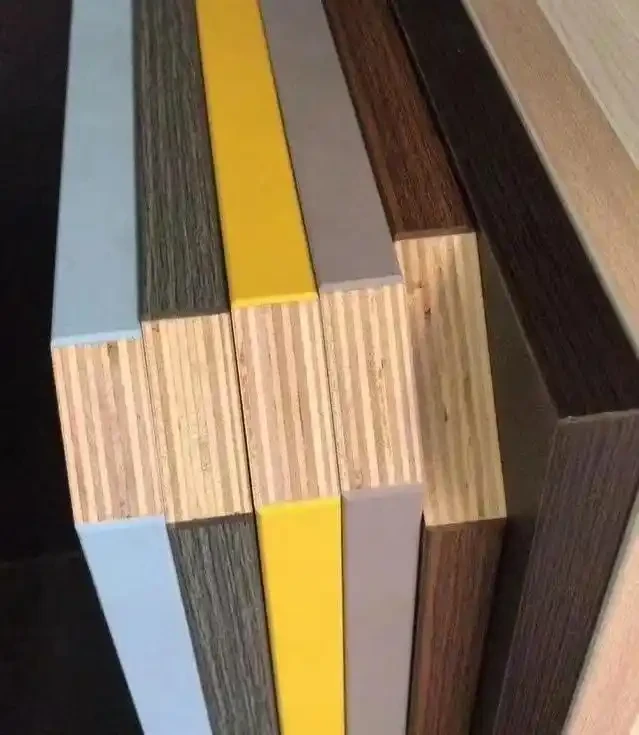
3. Particleboard: bonded wood particles
Particleboard presses wood or other lignocellulosic particles with adhesive. Many furniture panels have fine face particles and a coarser core. Raw-material appearance alone does not establish panel quality.
Consistent panel surfaces suit repetitive cabinet manufacture. Edge connections, repeated assembly, moisture-related thickness swelling and long-term shelf deflection need attention.[2]
Uses and verification:Specify by application. In EN 312, P2 covers interior fitments in dry conditions and P3 non-load-bearing use in humid conditions. These European classes are not automatic equivalents of Chinese grades.[2]
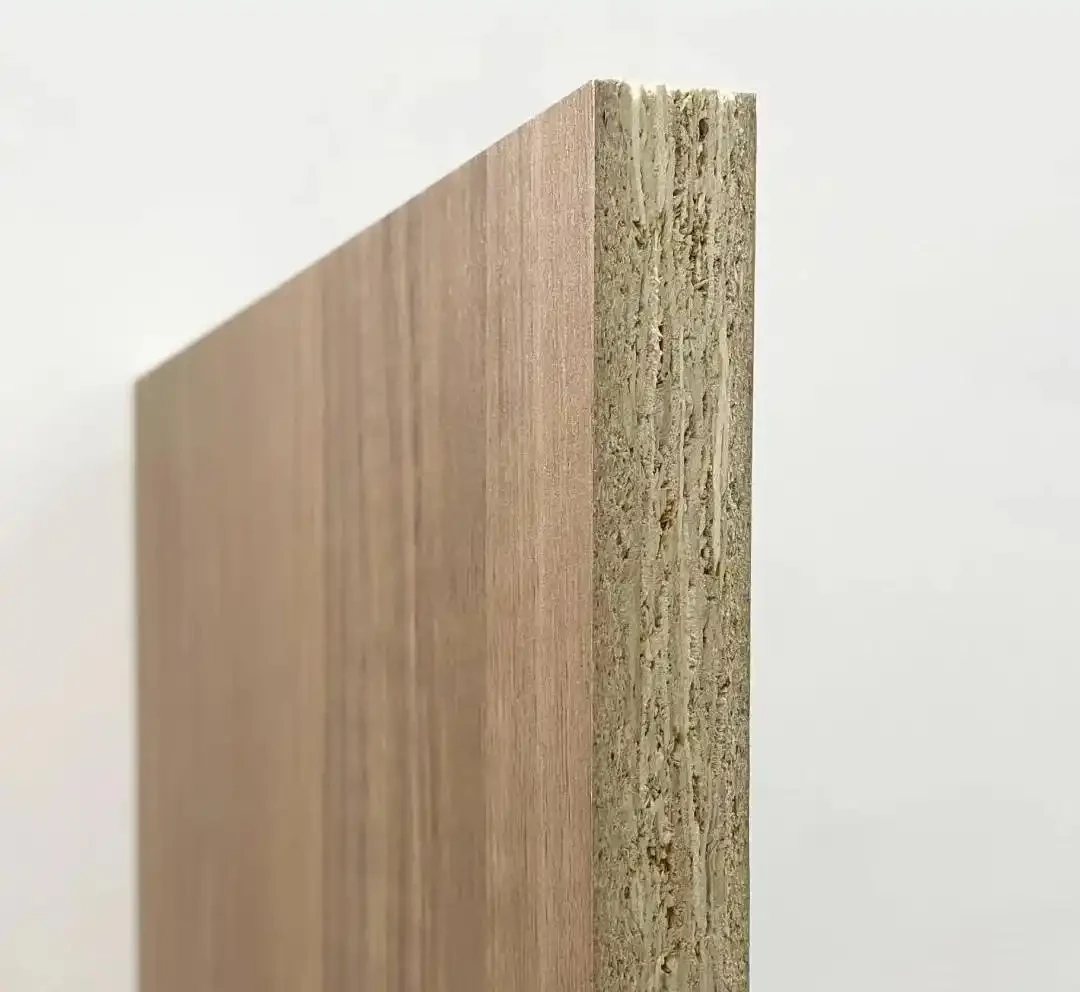
4. “Solid-wood particle board”: a particleboard trade name
In Chinese furniture sales, “particle board” and “solid-wood particle board” commonly describe wood particleboard. The name does not make it continuous solid timber or prove superior loading, moisture or emission performance.
Assess it as particleboard. Stain resistance, abrasion resistance and woodgrain appearance depend substantially on the overlay system. Screw performance also depends on face versus edge fixing, fastener selection and machining.[2][5]
Uses and verification:For fitted cabinetry, confirm core grade, facing, edge sealing and hardware. Ordinary furniture particleboard is not automatically suitable for load-bearing stair treads or other structural components.
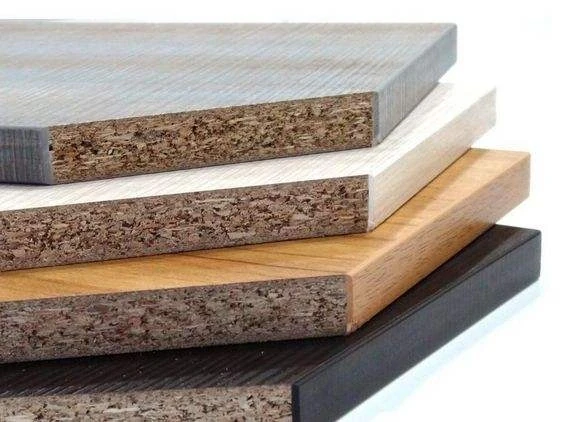
5. OSB: oriented strands
Oriented strand board bonds relatively long, thin wood strands in oriented layers. It differs from conventional particleboard. The Chinese nickname “European pine board” does not establish European origin.
Its directional structure suits rated applications, but the major strength direction matters. EN 300 distinguishes OSB/2 for load-bearing dry use, OSB/3 for load-bearing humid use and OSB/4 for heavy-duty load-bearing humid use. Humid-use classification does not mean immersion resistance or unprotected permanent exterior exposure.[3]
Uses and verification:Appropriately rated wall, roof and floor sheathing, or designed furniture applications. APA Exposure 1 is a separate bond-exposure classification allowing some construction moisture; it is not Exterior and cannot simply be exchanged for OSB/3.[6]
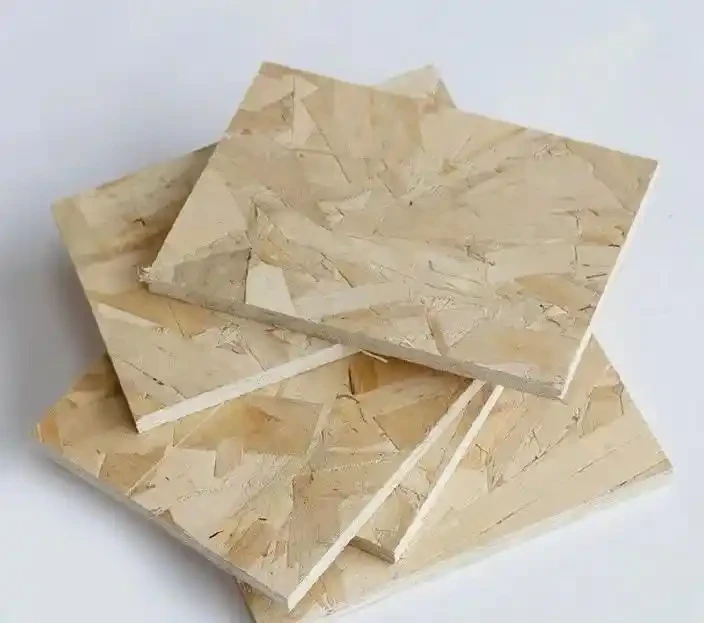
6. MDF: a refined-fibre substrate
Medium-density fibreboard uses separated wood fibres with adhesive and other constituents, rather than simply compressed “wood powder”. This section concerns furniture MDF, not every low- or high-density fibreboard.
A fine surface supports painting, veneering and routing. Standard interior MDF needs protection from sustained moisture; moisture-resistant products still need suitable detailing. Resin quantity alone does not determine measured formaldehyde emissions.[1][5][7]
Uses and verification:Profiled cabinet fronts, mouldings, wall panels and veneered components. Check heavy-door hardware and follow specified pilot-hole and edge-distance requirements.
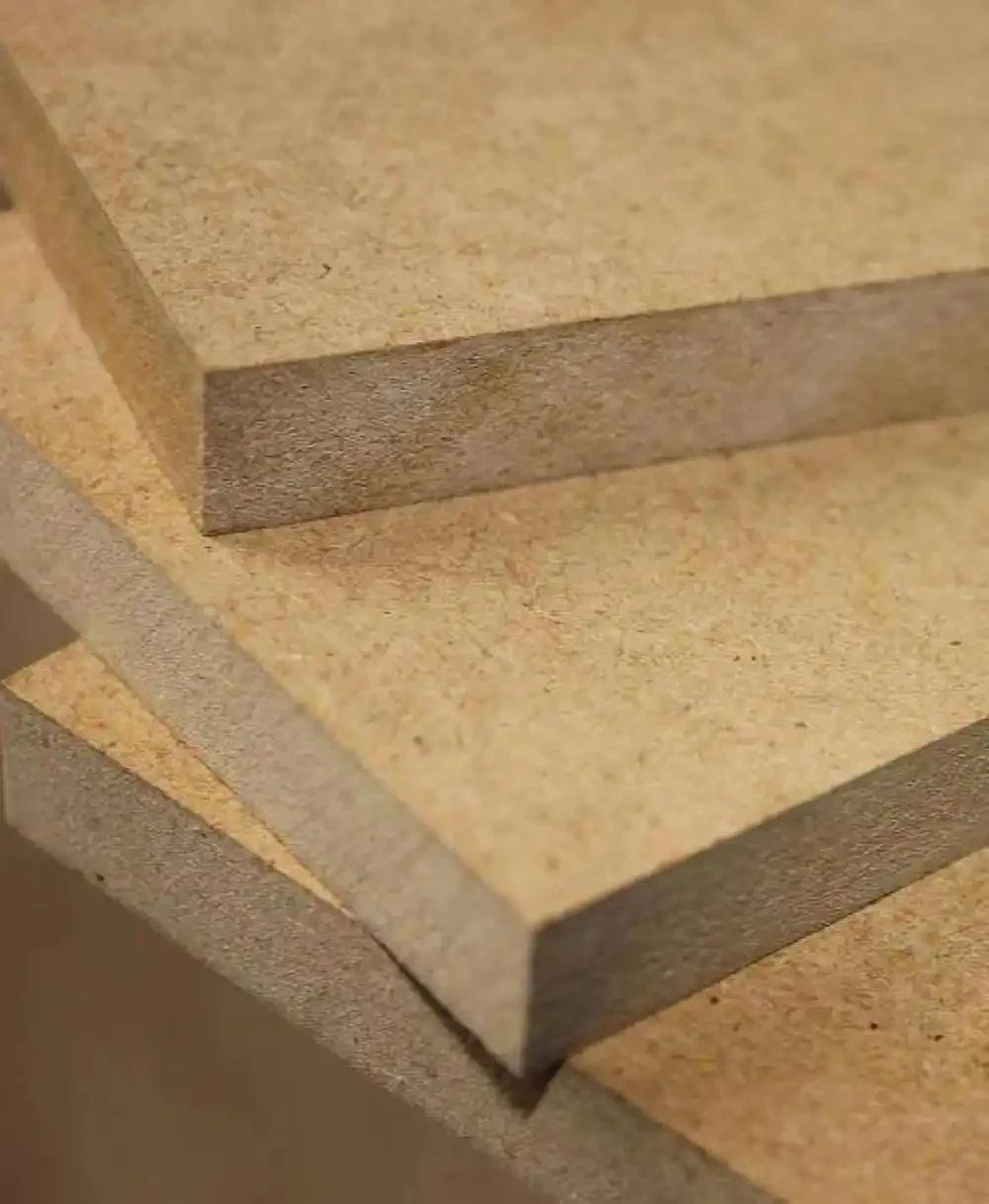
7. Blockboard: a strip-wood core with veneer faces
Blockboard normally has a core of side-by-side wood strips covered with veneers. Its core need not be poplar, and a universal minimum combined face thickness should not be asserted without identifying the applicable standard.
Core gaps, timber defects and bond quality affect performance. Bending is directional: evaluate core-strip orientation and veneer lay-up rather than an undefined claim of weak “vertical” strength.[4]
Uses and verification:Designed furniture parts, door cores and interior joinery. Inspect core joints, thickness tolerance, bonding, flatness and where screws will engage the core.
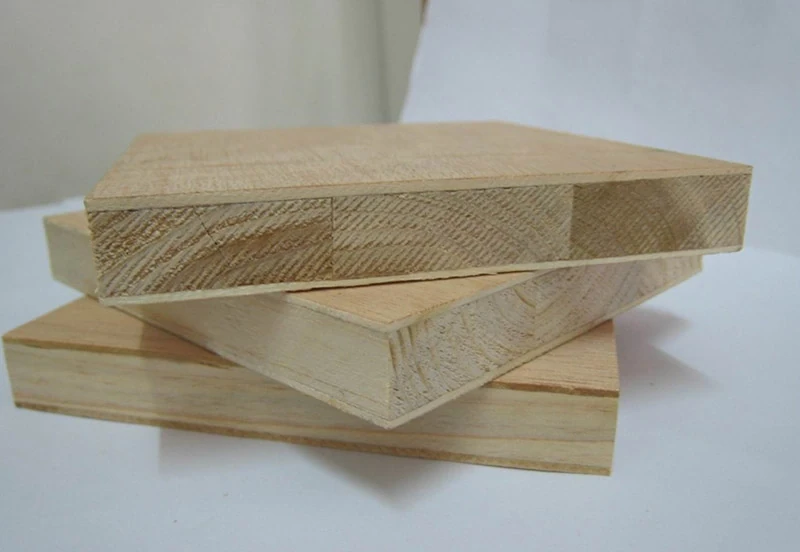
8. Finger-jointed panels: joined timber pieces
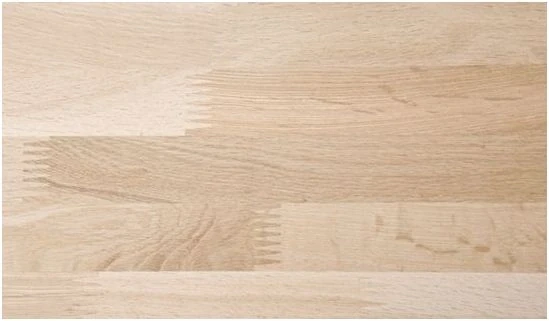
Finger joints bond interlocking profiles cut into timber ends. Furniture panels often combine this lengthwise joining with edge gluing to make wider boards. This differs from a veneered blockboard construction.
Short pieces can be utilised while retaining visible wood grain. Joint quality, moisture and manufacturing matter; neither lower emissions nor inevitable warping follows from the name. Structural finger-jointed lumber approvals do not automatically cover furniture panels.[1][8]
Uses and verification:Furniture panels, shelves and tops with allowance for movement. Cutting boards require separate checks of wood, adhesive, finish and food-contact requirements for the destination market.
Core, overlay and “eco-board” are different concepts
The core defines construction. Natural veneer, resin-impregnated paper, HPL and coatings form surface systems. The Chinese trade name “eco-board” often describes a paper-faced panel with a variable core; it is neither exclusively blockboard nor proof of low emissions. Specify core, facing, thickness and grade separately.
| Solid wood | Continuous wood; check moisture and movement |
|---|---|
| Plywood | Crossed veneers; verify bonding and class |
| Particleboard | Particle core; check edges, spans and moisture |
| Solid-wood particle board | Particleboard trade name; no separate guarantee |
| OSB | Oriented strands; verify direction and class |
| MDF | Fine fibres; useful for finishes and profiles |
| Blockboard | Strip core with veneers; check gaps and direction |
| Finger-jointed panel | Joined timber; inspect joints and moisture |
Five purchasing and acceptance checks
- Environment: dry rooms, humid service and direct wetting are different. Correct leaks and condensation, then choose the appropriate class. Moisture resistance is not waterproofing.
- Design: define thickness, span, load, long-term deflection and hardware; generic screw-holding claims do not replace connection design.
- Emissions: request traceable reports with applicable scope, method, class and validity. Results using different methods or units cannot be directly ranked. For covered products entering the US, verify TSCA Title VI requirements.[7]
- Samples: confirm overlay, colour, flatness, core, edge sealing and machining. Facing and edging cannot repair a nonconforming core.
- Delivery: store flat, protect edges and moisture-condition as instructed. Odour, photographs, green core colour and marketing names do not replace test evidence.
Frequently asked questions
Which panel has the lowest emissions?
There is no reliable ranking by name. Compare applicable test evidence and the complete finished system. Solid wood can also be joined or coated, and natural wood itself releases volatile substances.
Are OSB and plywood waterproof?
Not as a blanket claim. Check product class, bond durability and permitted exposure separately from the wood’s moisture absorption.
Is MDF only for profiled doors?
No. It is also used for veneered furniture, mouldings and wall panels, subject to suitable grade, detailing and conditions.
Does a veneer face make a panel solid wood?
No. Veneer is a surface layer; identify the underlying plywood, MDF or other core separately.
Technical references
- USDA Forest Products Laboratory — Wood Handbook (2021), Chapters 4, 10–13
- WPIF PanelGuide — Particleboard
- WPIF PanelGuide — OSB
- WPIF PanelGuide — Plywood (including blockboard)
- Oklahoma State University Extension — Cabinet panel substrates
- APA — Exposure 1 / Structural I
- US EPA — Composite wood formaldehyde standards: stakeholder questions
- Natural Resources Canada — Finger-joined lumber
Reviewed 2026-11-02. General selection guidance, not certification of photographed samples. Project design, current applicable standards and valid supplier documentation govern specification.