
Intricate Wood Veneer Marquetry: A Study in Bespoke Design
When grain becomes a language of composition, a surface gains a character of its own.
Veneer marquetry brings natural figure into a deliberate arrangement. Turning and joining grain creates radiating, interwoven and curving rhythms; even closely related colours can reveal rich layers through changes in direction.
These photographs show decorative layups on workshop benches. Unfinished edges, positioning tape and visible joints offer a close view of patterns in progress. From abstract geometry to classical symmetry, the compositions invite attention to proportion, order and detail in bespoke design.
Geometric composition: order within freedom
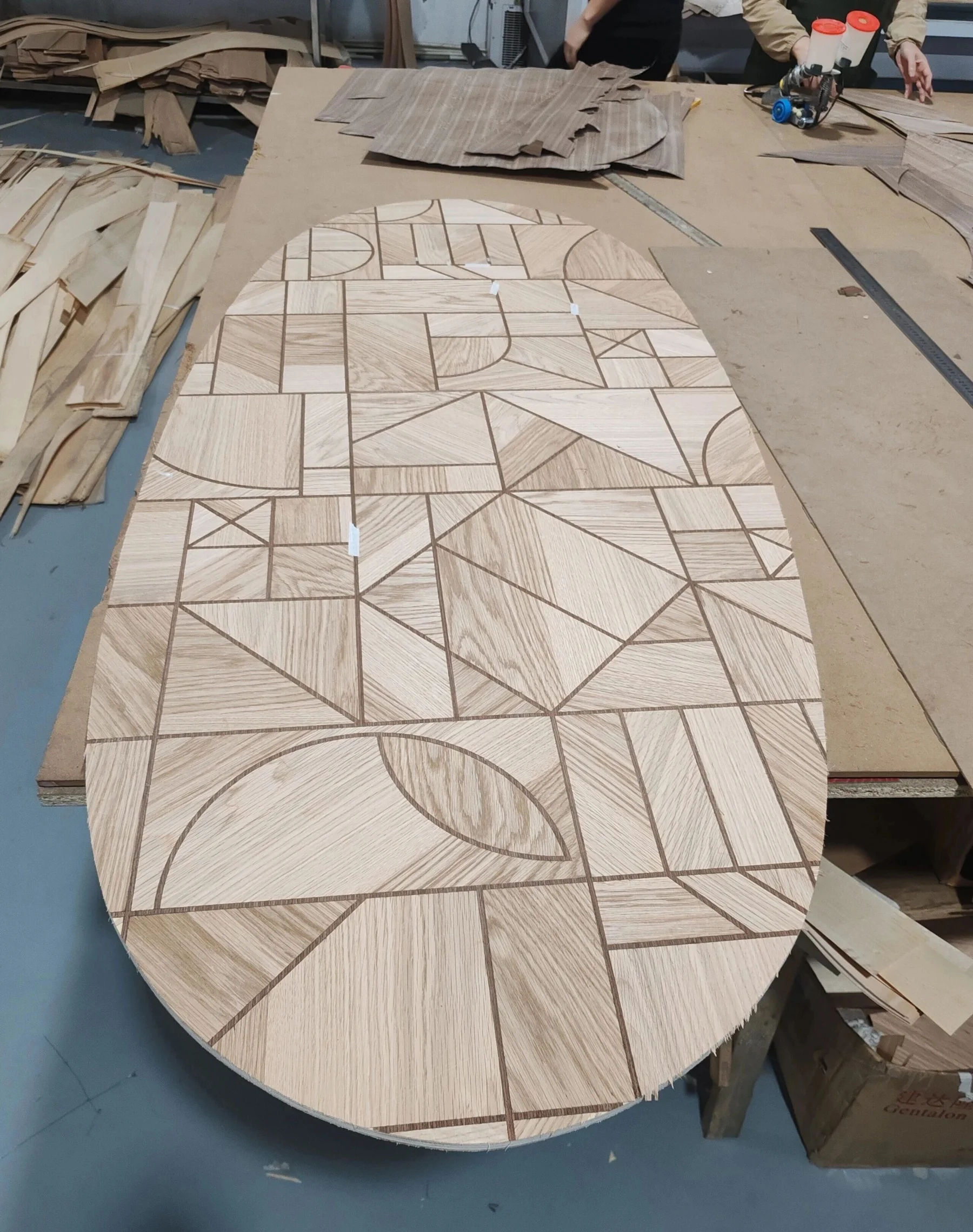
Straight lines divide the surface into varied fields while curves thread between them. Dark fine lines outline pale grain; rectangles, triangles and curved profiles create an architectural character.
Grain direction participates in every field: horizontal grain opens the composition, diagonals guide the eye and curves soften the linear framework. A restrained palette holds the complexity together as inspiration for bespoke furniture and interior surfaces.
Colour fields and grain: depth within restraint
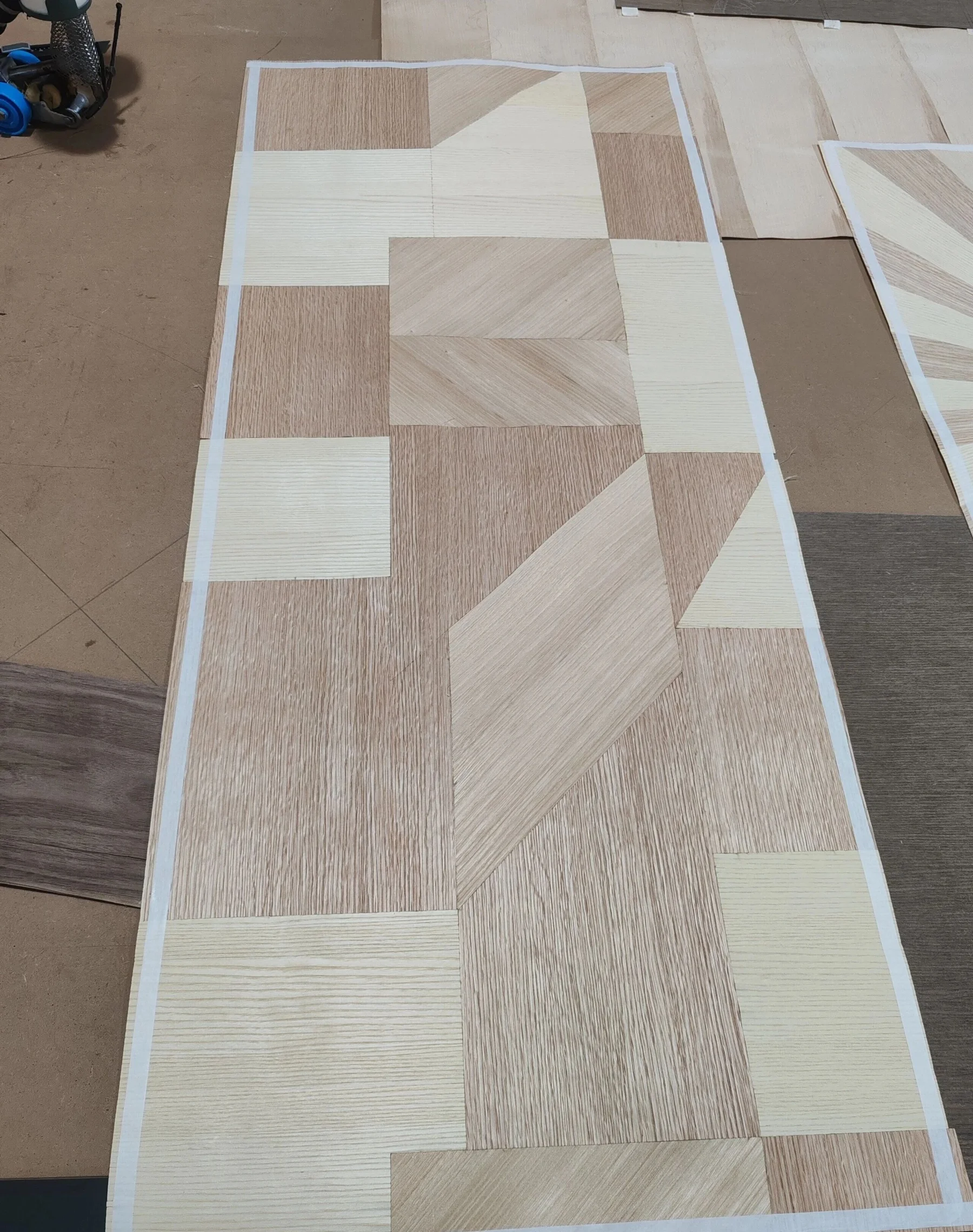
Pale and darker veneers alternate through rectangles, diagonal cuts and folded lines. Larger uninterrupted areas give the natural grain room to be seen.
Refinement lies in the relationship between field proportions and grain direction. Adjacent areas remain distinct while belonging to a whole. Furniture dimensions, elevation divisions and spatial axes can guide a project-specific composition.
Sunburst composition: a precise visual centre
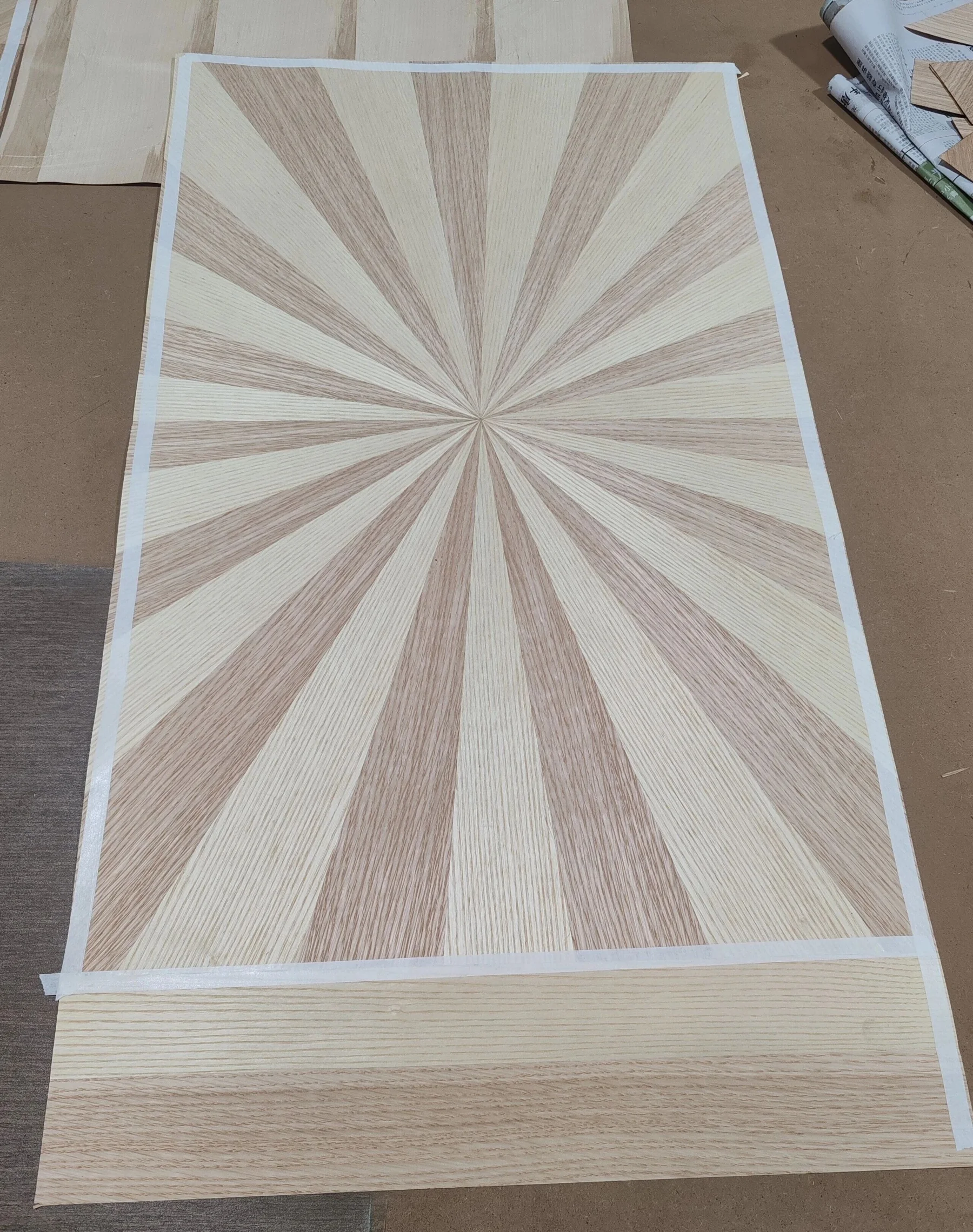
Slender wedges converge on one point. Alternating light and darker fields strengthen the radial movement while grain extends the pattern across the surface.
Look from the centre outward: how tips meet, fields open and edges resolve. For a bespoke design, the centre should relate to the furniture outline and viewing angle. A central position feels formal; an offset position can introduce movement.
Continuous fans: movement across a large surface
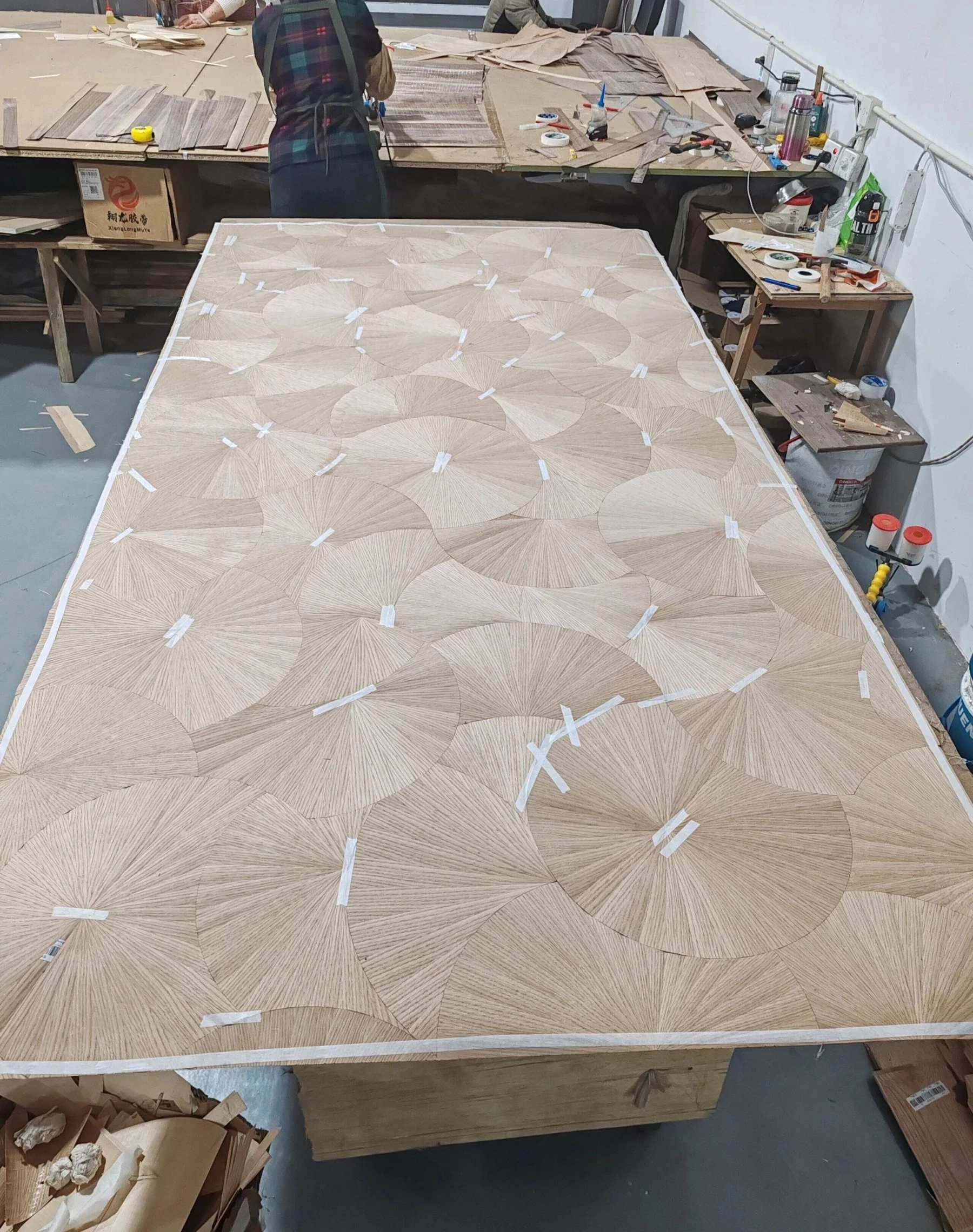
Fan-shaped units connect as grain opens from multiple centres, producing a flowing rhythm reminiscent of ripples. Curved boundaries bring individually directed fields into a larger composition.
Positioning tape records the work in progress. Close viewing reveals grain and junctions; from farther away, curves and changes in density become more apparent. The interest unfolds between these two viewing distances.
Folded lines: a sense of depth through grain
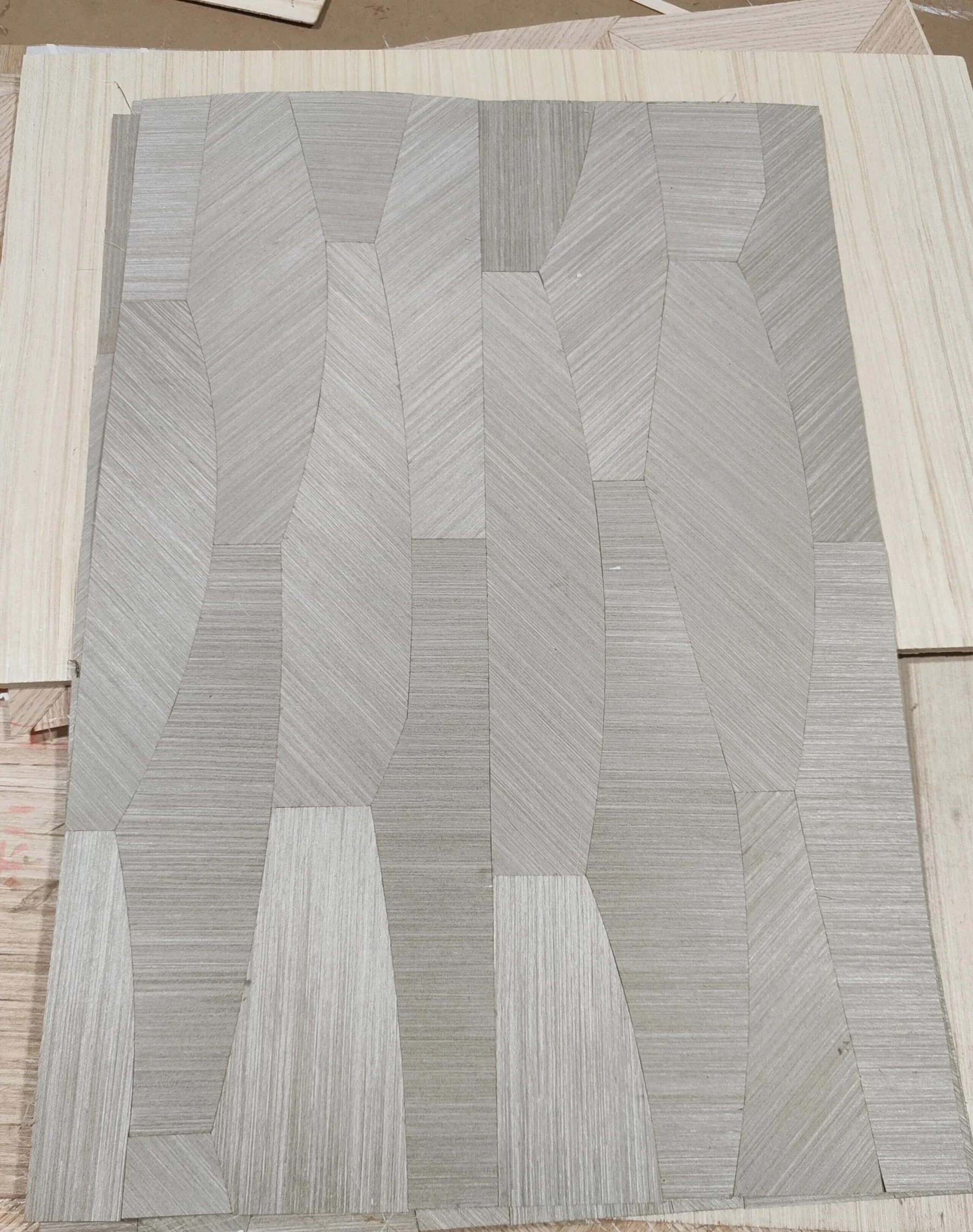
Alternating diagonal grain creates continuous zigzags and a faceted impression on a flat surface. Small transverse blocks interrupt long lines and vary the rhythm.
A relatively consistent grey palette lets direction carry the design, giving a quiet, crisp contemporary character. Field scale should suit viewing distance: excessive density can blur the outline, while oversized divisions can lose delicacy.
Classical symmetry: borders and floral detail
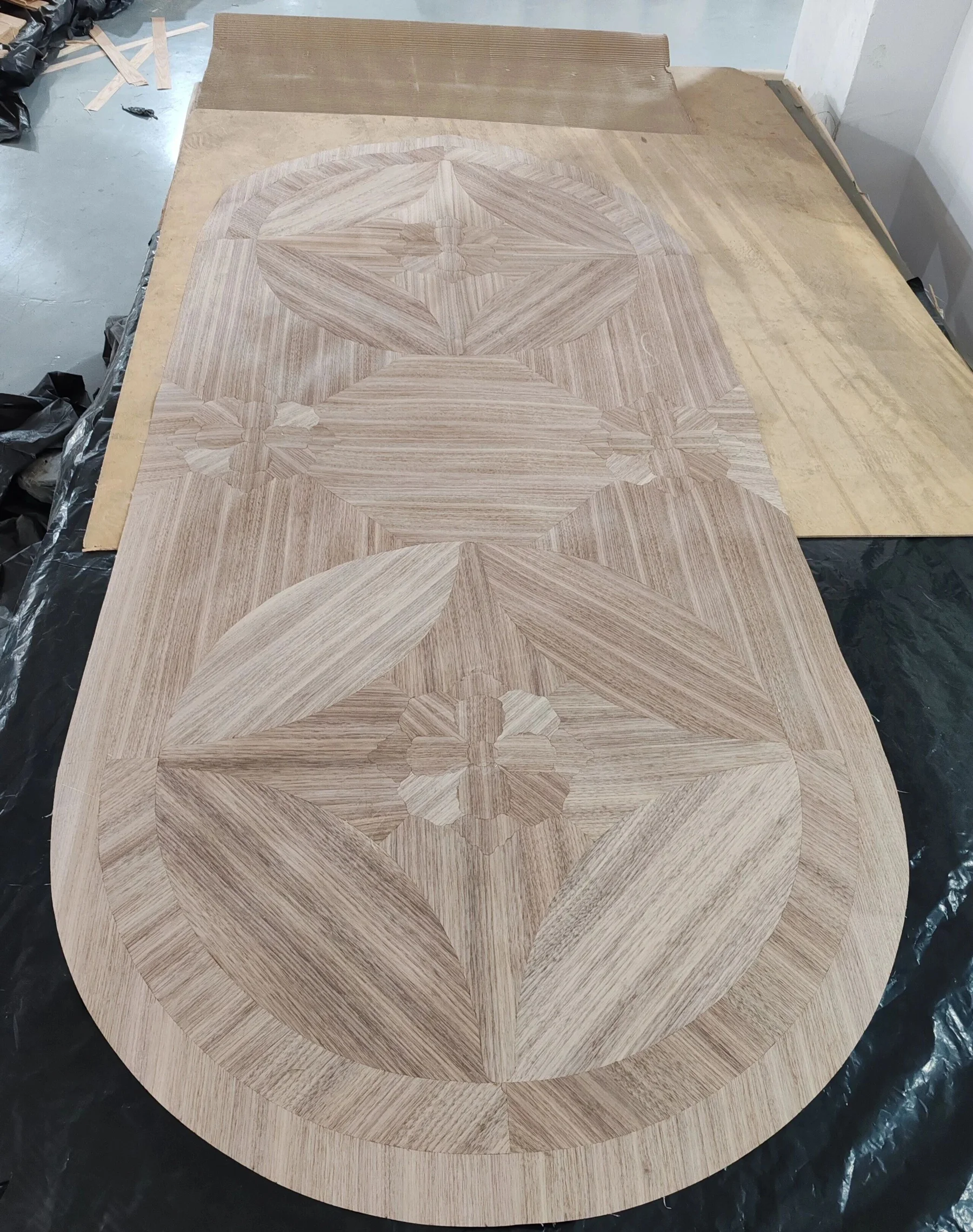
A central motif, flower-like details and layered borders establish a complete decorative order. Grain follows diamonds, triangles and curves, creating variation within a related colour range.
The central composition answers the outer border, and rounded corners soften the outline. The centre draws attention, floral elements enrich close viewing and borders hold the whole together: a reference for classically influenced bespoke furniture and interiors.
Bespoke refinement: the whole and the detail
Read intricate veneer work at three scales: proportion from a distance, junctions up close and grain direction in detail. Composition sets the character, joint boundaries define clarity and grain brings expression to the surface.
For an actual project, confirm dimensions, substrate, edge treatment, finish and installation conditions through samples. These layups are shown in progress; final colour, sheen and feel should be judged on a finished physical sample. A carefully composed surface gives natural variation an individual order and a bespoke space details worth returning to.
Related design and material guides
Design commentary based on supplied photographs. Species, dimensions, production methods and project ownership are not verified; these images are not presented as completed KUNSUN projects.