
North American Wood Veneer: Black Walnut, Red Oak and White Oak
Natural veneer brings real wood grain and texture to furniture and interiors. Good specification connects species selection with cutting direction, leaf sequence, thickness and the complete bonded panel. This guide focuses on North American black walnut, red oak and white oak, illustrated entirely with real veneer photographs.
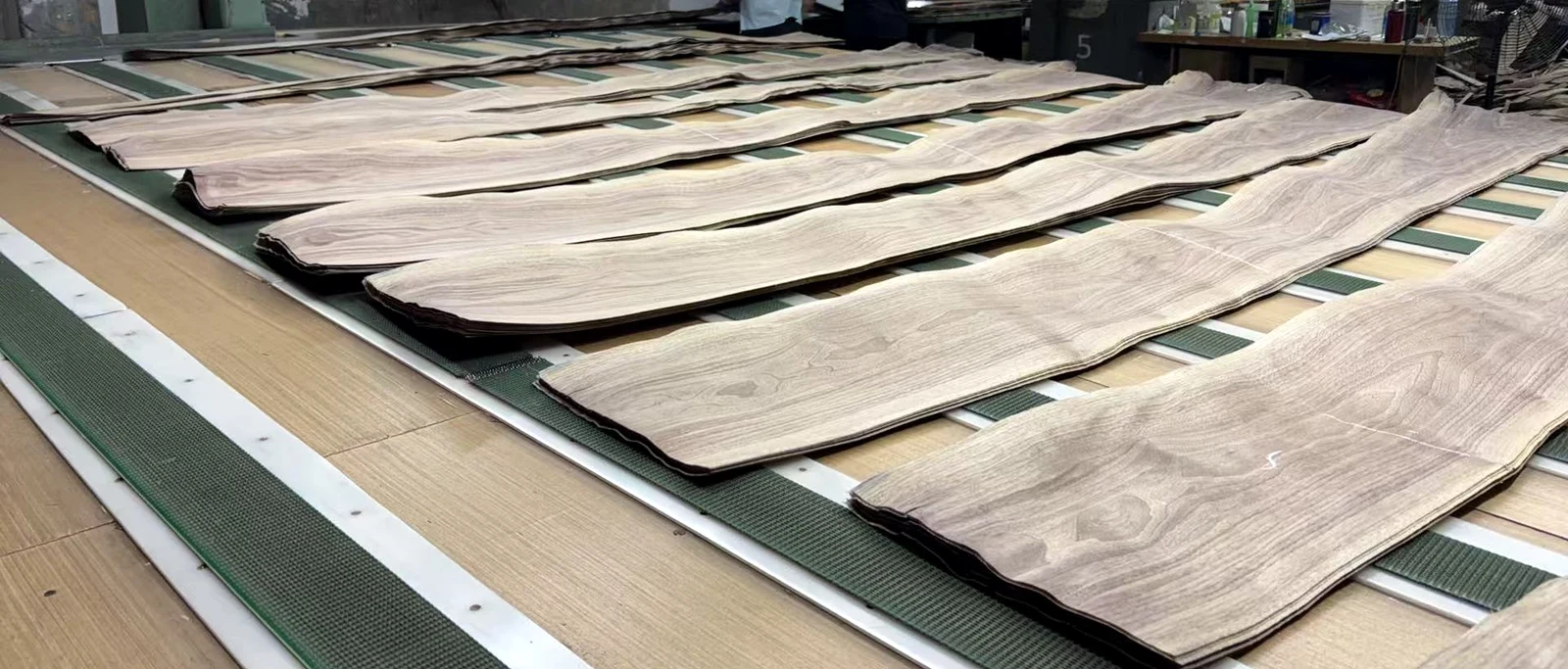
What is natural wood veneer?
Natural veneer consists of thin sheets cut from logs or flitches, retaining the original wood structure and grain. It is commonly bonded onto a substrate. The face, core, adhesive and coating together determine the finished panel; the face species alone does not establish structural, emissions, fire or water-resistance performance. Printed woodgrain film is different from natural veneer. Reconstituted veneer uses processes such as dyeing, block assembly and re-slicing to create its pattern.
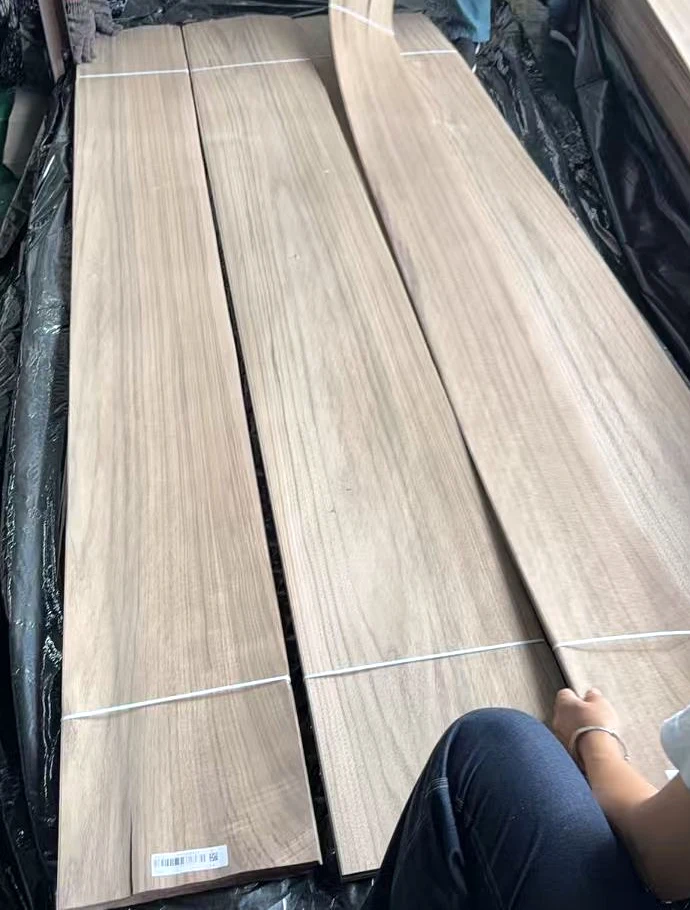
Black walnut: rich heartwood and expressive grain
North American black walnut is Juglans nigra. Its heartwood ranges through brown to deep chocolate tones, with lighter sapwood. Natural colour variation, pin knots and distinctive figure may occur. Plain-sliced selections offer flowing crown patterns, while straight-grain selections give a more ordered appearance. Walnut suits furniture, cabinetry and architectural woodwork. Specify acceptable sapwood, colour variation and any steaming or other treatment; one photograph cannot define every batch.
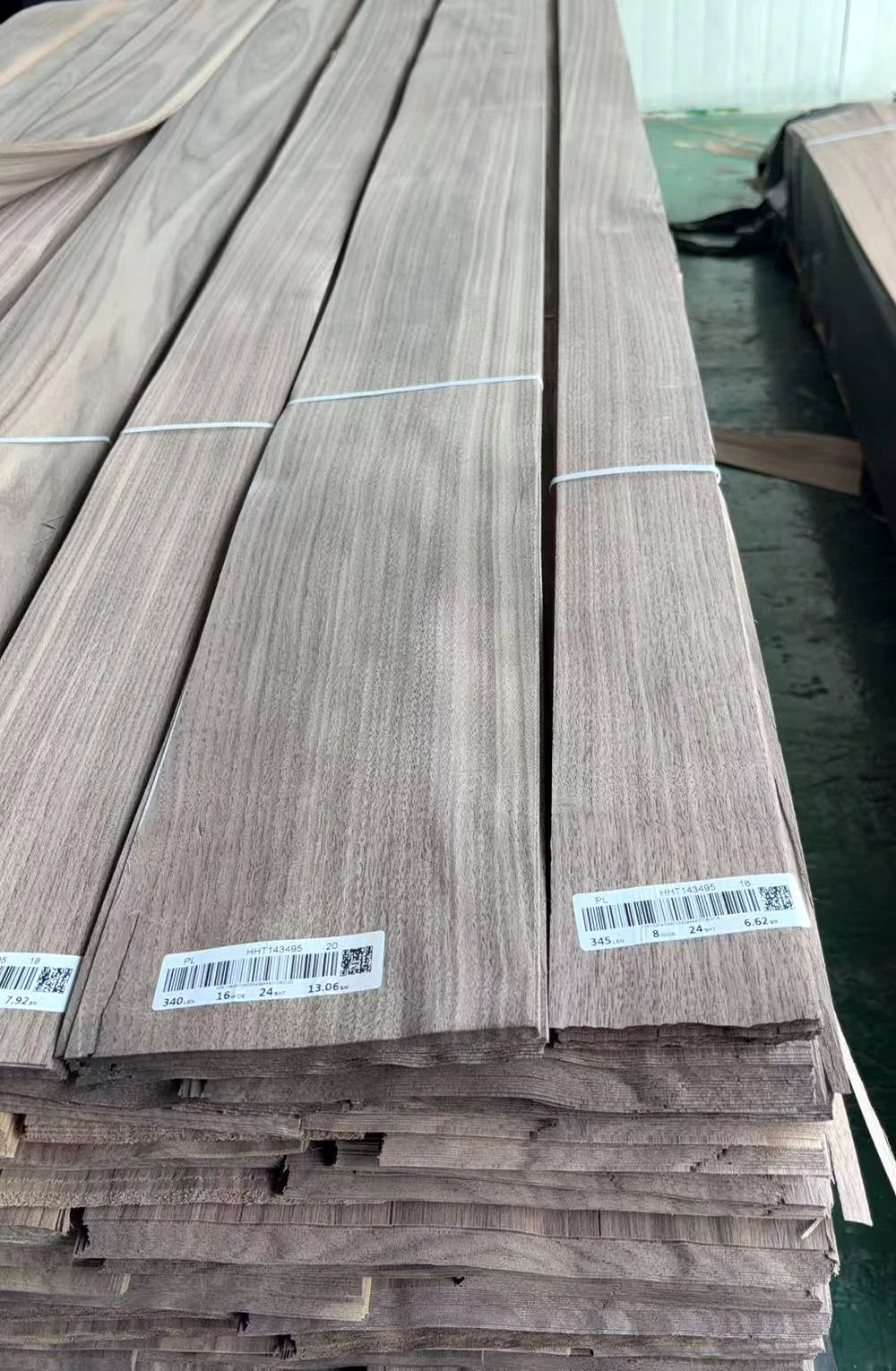
Red oak: prominent pores and clear grain contrast
North American red oak is a commercial group represented by Quercus rubra and related species. Large earlywood pores contrast with smoother latewood. Colour can be tan, pinkish or reddish brown without every leaf looking red. Plain slicing produces expressive crown grain; quarter slicing can expose ray figure, while rift cutting helps reduce prominent flake and favour straight grain. Agree colour range, grain spacing, ray acceptance and sequence requirements together.
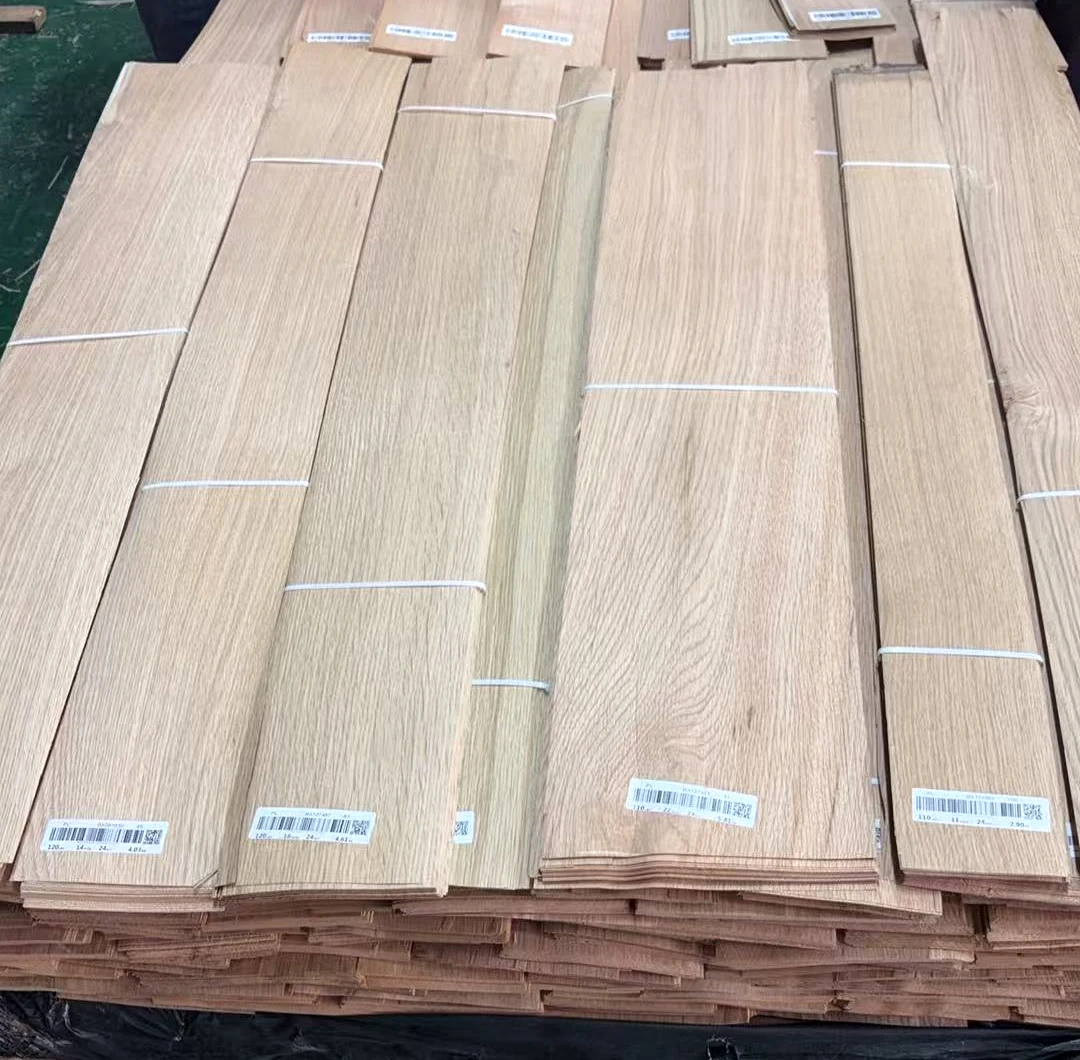
White oak: natural brown tones and ray figure
North American white oak is a commercial group represented by Quercus alba and related species. Heartwood commonly ranges from light brown or greyish brown to medium brown. Quarter slicing can highlight distinctive ray flake; rift selections favour more consistent straight grain. White oak works well in natural-tone furniture and interior joinery. Its colour overlaps with red oak, so photographs and stained surfaces cannot replace species and provenance records. Solid white oak properties do not automatically describe a veneered panel.
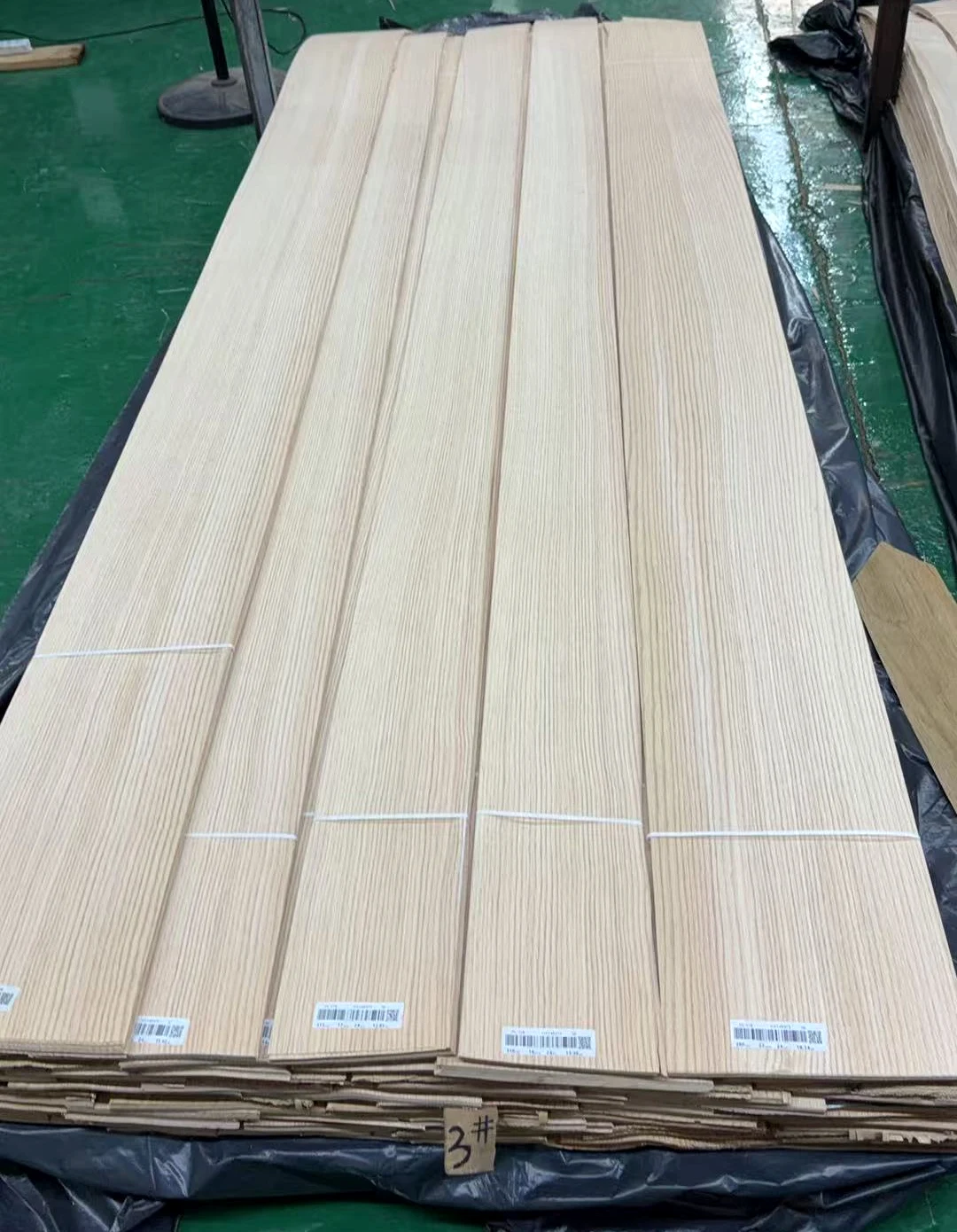
Cut and match: a second layer of design
Plain slicing commonly gives cathedral or crown patterns. Quarter slicing tends toward straight grain and reveals rays in oak; rift cutting targets a more continuous straight-grain appearance. Book matching turns adjacent leaves to form a mirrored pattern. Slip matching retains the same face and direction. Alternating light reflection in a book match can create a light-dark effect without uneven staining. Approve sequence, direction, joints and a finished layout for large surfaces.
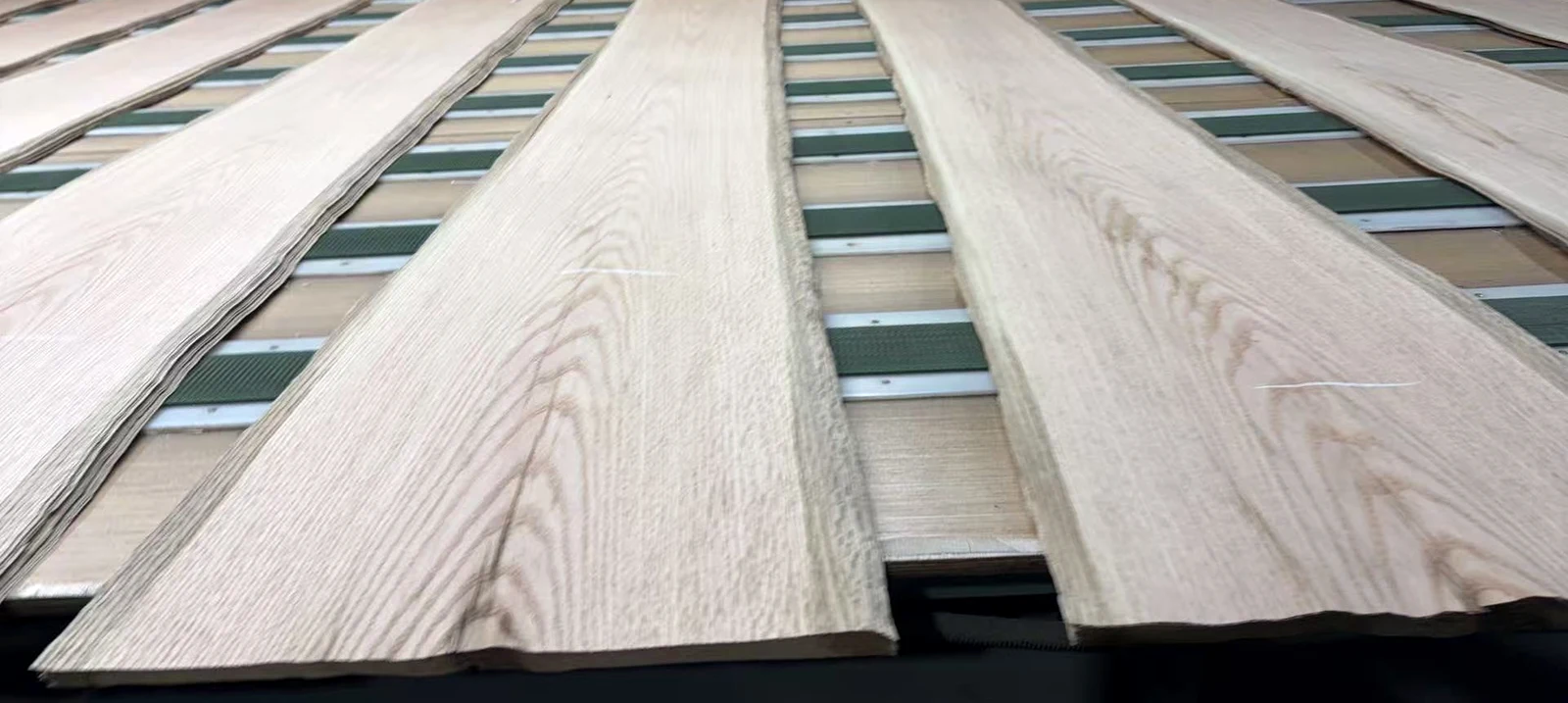
Thickness and yield: make the numbers explicit
Agree thickness around application, pressing and sanding allowance rather than treating one value as universal. In an ideal loss-free calculation, 1 m³ of solid wood divided into 0.5 mm sheets yields 2,000 m²: 1 ÷ 0.0005. This is a geometric upper bound, not an expected production yield. Real output is reduced by conversion, cutting, defects, trimming, drying and selection. Distinguish loose-leaf thickness, finished face thickness and total panel thickness in every specification.
Specify and process the complete system
Hard maple, cherry and ash add other North American colour and grain options. For any species, record species and origin documentation, cut, net dimensions and tolerances, thickness measurement, heartwood/sapwood, colour limits, knots and checks, sequence, matching, moisture and storage requirements. Trial bonding and finishing with the actual core, adhesive and equipment. Sand carefully to prevent face breakthrough. Approve representative finished samples and a full layout; certification and emissions claims require the relevant order documents and finished-product evidence.
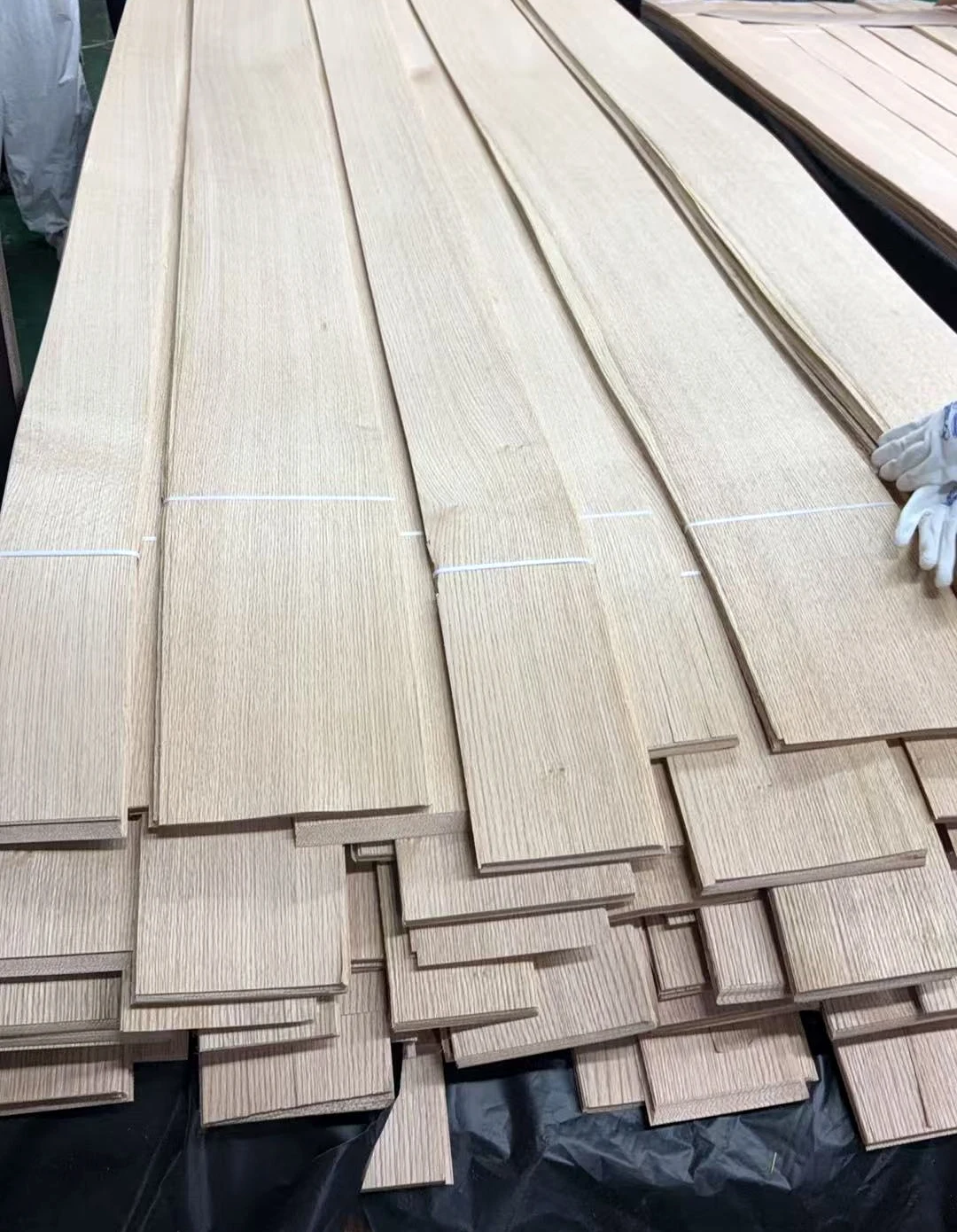
Species and specification reference
| Black walnut | Juglans nigra; brown heartwood, lighter sapwood; specify colour and sapwood |
|---|---|
| Red oak | Quercus rubra and related species; strong pore contrast; specify cut and rays |
| White oak | Quercus alba and related species; brown to grey-brown; distinctive quarter-cut rays |
| Dimensional example | 0.5 mm = 0.0005 m; 1 m³ ÷ 0.0005 m = 2,000 m² with no loss |
All photographs are user-supplied real veneer views. Captions describe grain or handling, not verified species, origin or grade of the photographed lots. Original grain, labels and natural variation are retained. Confirm colour with finished samples.
Veneer specification questions
Is veneer a solid wood board?
Veneer is a thin sheet of real wood. A veneered panel combines a wood face with a substrate, so dimensions and performance need separate specification.
How do I distinguish red oak from white oak?
Use documented species identity and material characteristics rather than colour or a single photograph; obtain professional identification when necessary.
Is thicker veneer always better?
No. Match thickness to application, processing and sanding allowance. Bond quality, moisture control and finishing also matter.
Sources and technical references
- Decorative Hardwoods Association — Veneer
- Columbia Forest Products — American black walnut
- Columbia Forest Products — Red oak
- Columbia Forest Products — White oak