
Three-Layer White Oak Flooring: Natural Character in Wide Planks
The appeal of a wood floor comes from both its lines and the individual marks of growth in each board. These 240 mm wide, 2200 mm long white oak planks give the grain room to unfold. Knots, cracks and tonal variation create a surface with natural depth and individuality.
This article presents a three-layer flooring sample. Dimensions are thickness × width × length: 15 × 240 × 2200 mm. The three layers are 4 mm, 7 mm and 4 mm in sequence. Photos show appearance and local structural details; approve color using physical samples.
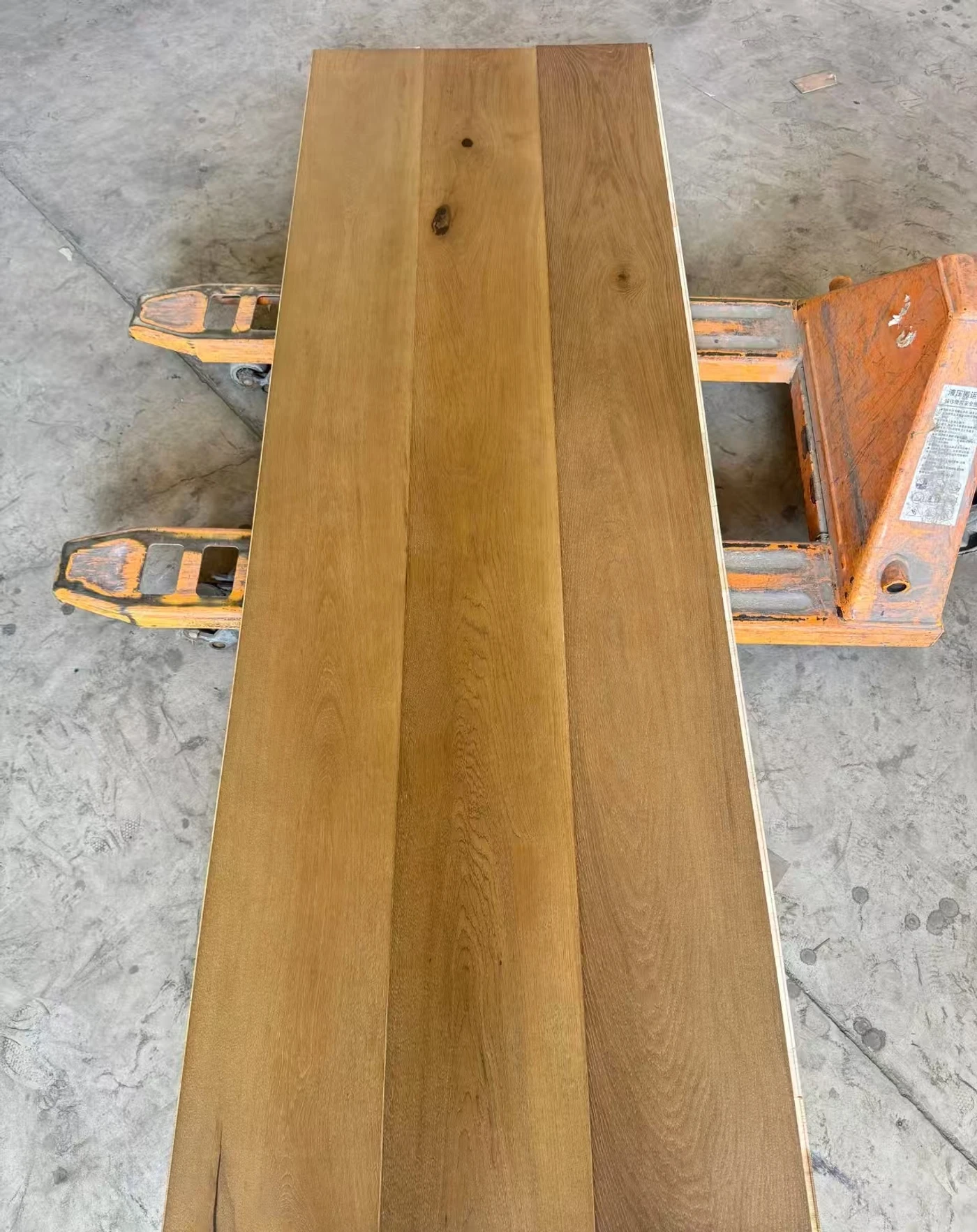
Wide, long planks reveal the grain
A 240 mm width and 2200 mm length provide a generous field for the grain. The photos show straighter lines, sweeping crown patterns and local ray figure. Each board varies; the aim is a harmonious selection rather than identical patterns on every plank.
Selection and specification:Consider rooms where wood grain should be a prominent design feature; set the layout to suit room proportions and direction.
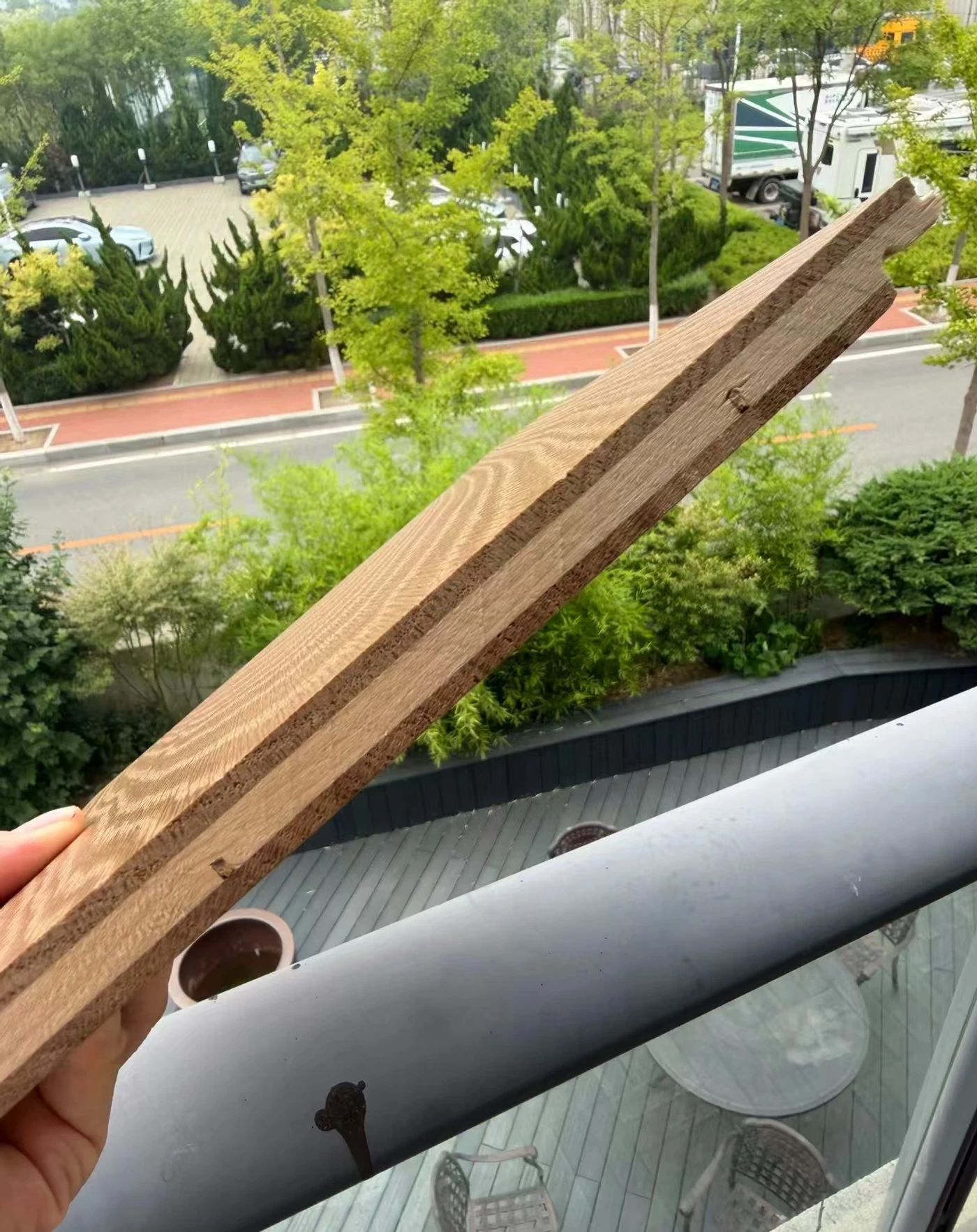
Understanding the 4 / 7 / 4 mm build-up
The specified layers total 15 mm: a 4 mm face, 7 mm middle layer and 4 mm backing. White oak identifies the featured surface species. The middle and backing species are not specified, so this should not be called all-white-oak construction. Layer orientation, adhesive system and performance require the actual technical documentation.
Selection and specification:Confirm species for each layer, nominal thickness, tolerances and machined dimensions.
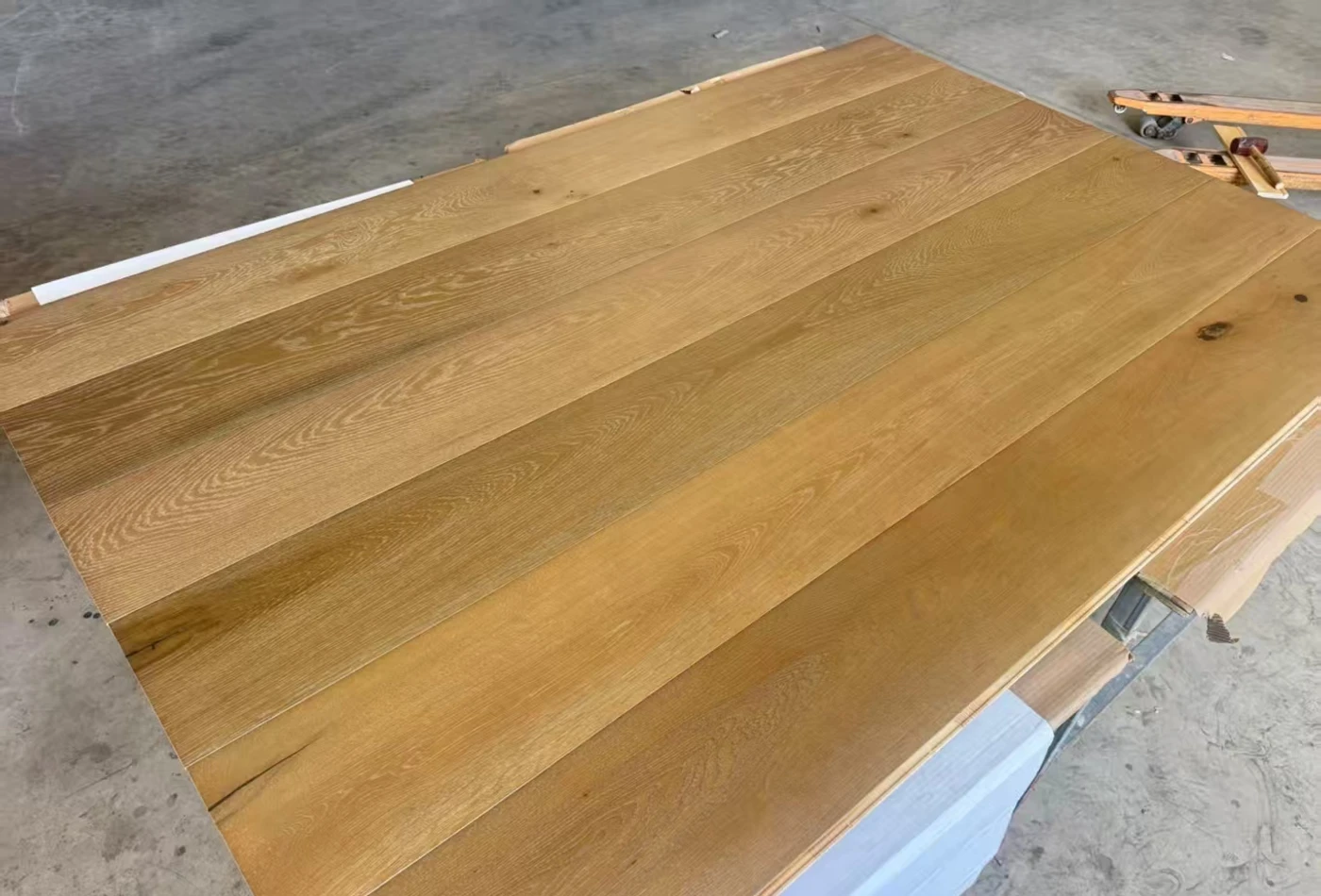
Knots and cracks give the surface character
Knots interrupt the grain with swirling lines and changes of tone; cracks introduce local linear detail. Together they create a natural, rustic appearance. Approve knot sizes, frequency, crack limits and repair color through a representative set of samples. A photograph alone cannot establish whether an individual feature has been filled.
Selection and specification:Natural character does not justify loose knots, sharp edges or expanding cracks; agree appearance and service quality separately.
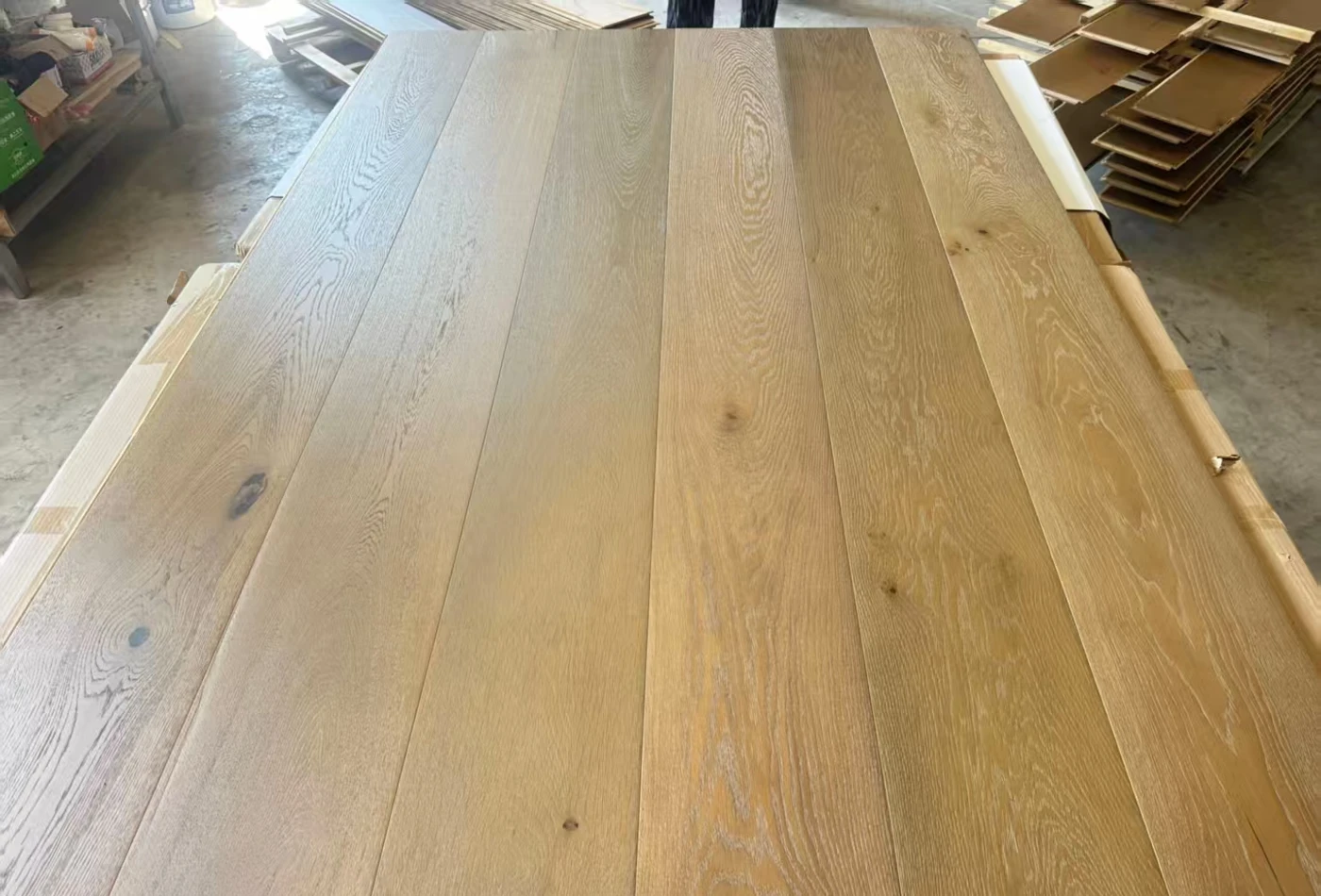
A balanced floor starts with several boards
The overall effect depends on how boards work together. Trial-layout the planks and distribute stronger tones, prominent knots and active grain so they do not cluster. The warm appearance in these photos also depends on lighting, surface treatment and camera conditions.
Selection and specification:Review several same-batch finished samples under project lighting before approving color, sheen and repairs.
Layered flooring still needs moisture control
Wood changes dimensions as moisture conditions change. An engineered structure does not make flooring waterproof or immune to movement. Check flooring and subfloor moisture and establish suitable site conditions before installation, following the supplier’s instructions for this construction.[1][2]
Selection and specification:Confirm joint system, adhesive, subfloor flatness, movement allowances and any underfloor-heating suitability using actual product documents.
Specify appearance and technical details together
Alongside 15 × 240 × 2200 mm and the 4/7/4 mm build-up, define finish, edge detail, joints, acceptable character and packaging. A 4 mm face does not guarantee a fixed number of sanding cycles; refinishing depends on the actual profile, finish and condition.
Selection and specification:Provide quantity, location, application and reference samples when discussing supply and processing.
Sample specifications
The sample has three layers totaling 15 mm.
| Surface species | White oak |
|---|---|
| Thickness × width × length | 15 × 240 × 2200 mm |
| Face / middle / backing | 4 / 7 / 4 mm |
| Appearance | Natural knots, cracks and grain variation |
Sample and ordering checklist
- Confirm thickness × width × length: 15 × 240 × 2200 mm.
- Confirm 4 / 7 / 4 mm layers and specify middle and backing species separately.
- Approve knots, cracks, color variation and repairs with several samples.
- Agree finish, sheen, bevel, joint system and dimensional tolerances.
- Check site and material moisture before installation and follow product instructions.
Frequently asked questions
Is this solid wood flooring?
It is three-layer engineered flooring, not a homogeneous solid board. This article confirms the white oak surface and layer thicknesses; middle and backing species need separate confirmation.
Are all natural cracks acceptable?
No. Character cracks must remain within agreed limits and meet safety and service requirements. Loose features, sharp edges, growing cracks or bonding problems cannot be justified by a rustic appearance.
References
Natural grain and tones vary between boards. Confirm inner species, finish and installation performance using supply documentation.