
The Beauty of Burl: Natural Veneer and Bespoke Furniture
Swirls, eyes and clustered figure give burl veneer a distinctive presence in furniture and interiors. Selection, matching and proportion shape its effect as much as the material itself.
Burl describes abnormal woody growth and associated material, not a separate tree species. A burl-figured furniture surface may use natural veneer over a substrate or another decorative process; appearance alone cannot establish construction.
What is a burl? Causes are not universal
University extension sources describe burls as abnormal swellings on trunks or branches. Injury, pathogens and other growth factors may be involved, but the cause of many burls is unknown. They cannot all be explained as insect-related healing. Cut surfaces may show irregular clustered figure; not every curl, knot or birdseye is burl.[1]
Burl veneer and solid burl: surface versus structure
Natural veneer is a thin layer of wood that can be bonded to an appropriate substrate for cabinetry, walls and furniture. Burl veneer is not an entire solid burl, and veneering does not make the wood false. Specify natural, reconstituted and printed surfaces separately. Sequential leaves and matching can create closely related or mirrored patterns; absolute non-repetition should not be promised.[2]
Cabinet doors and shelving: a figured focal point
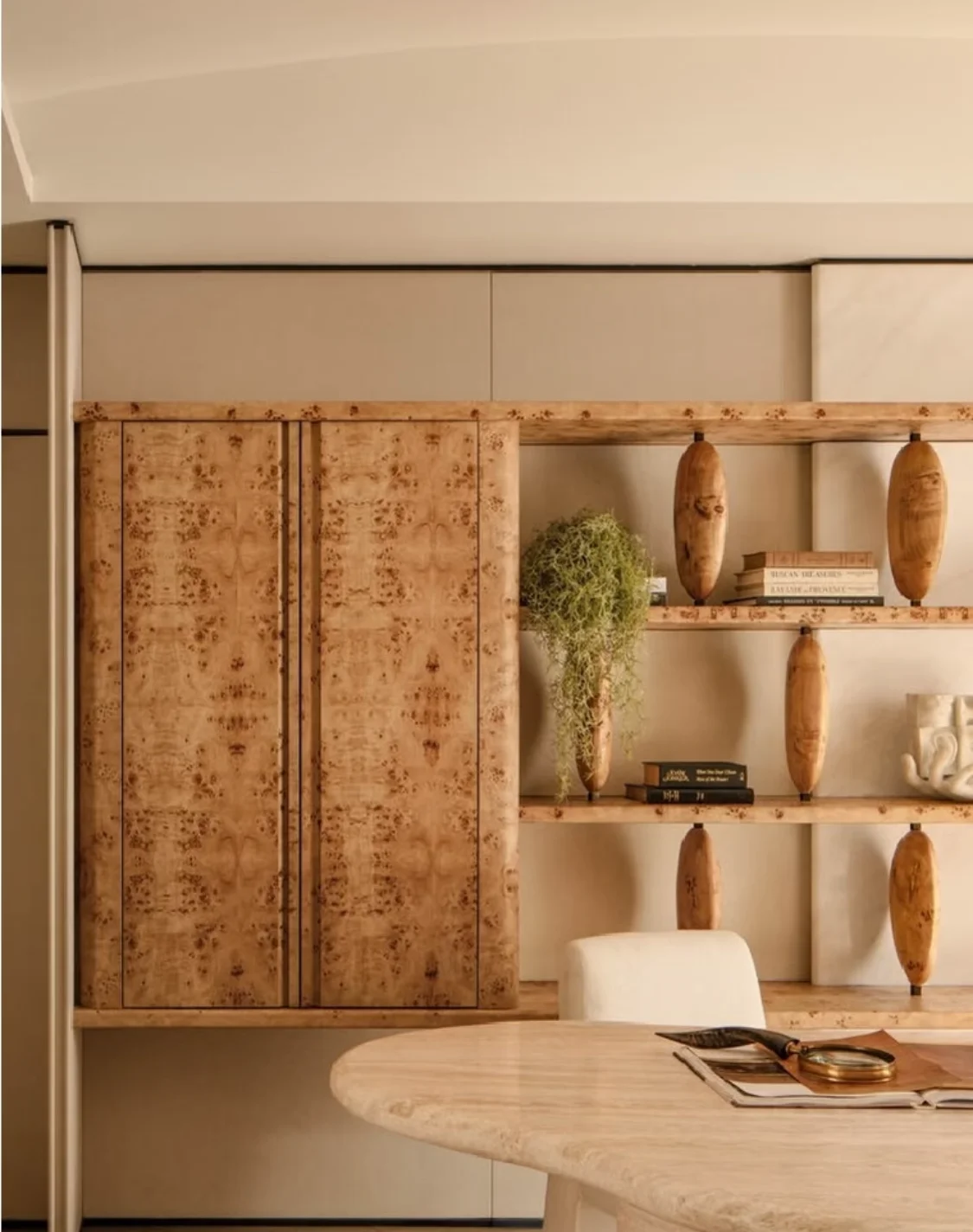
The pictured doors and display shelves form a warm band of eye-like figure. Panel divisions and intervals give the pattern rhythm. This is a reading of visible design, not species or structural identification.
Pairing with stone: establish a visual hierarchy
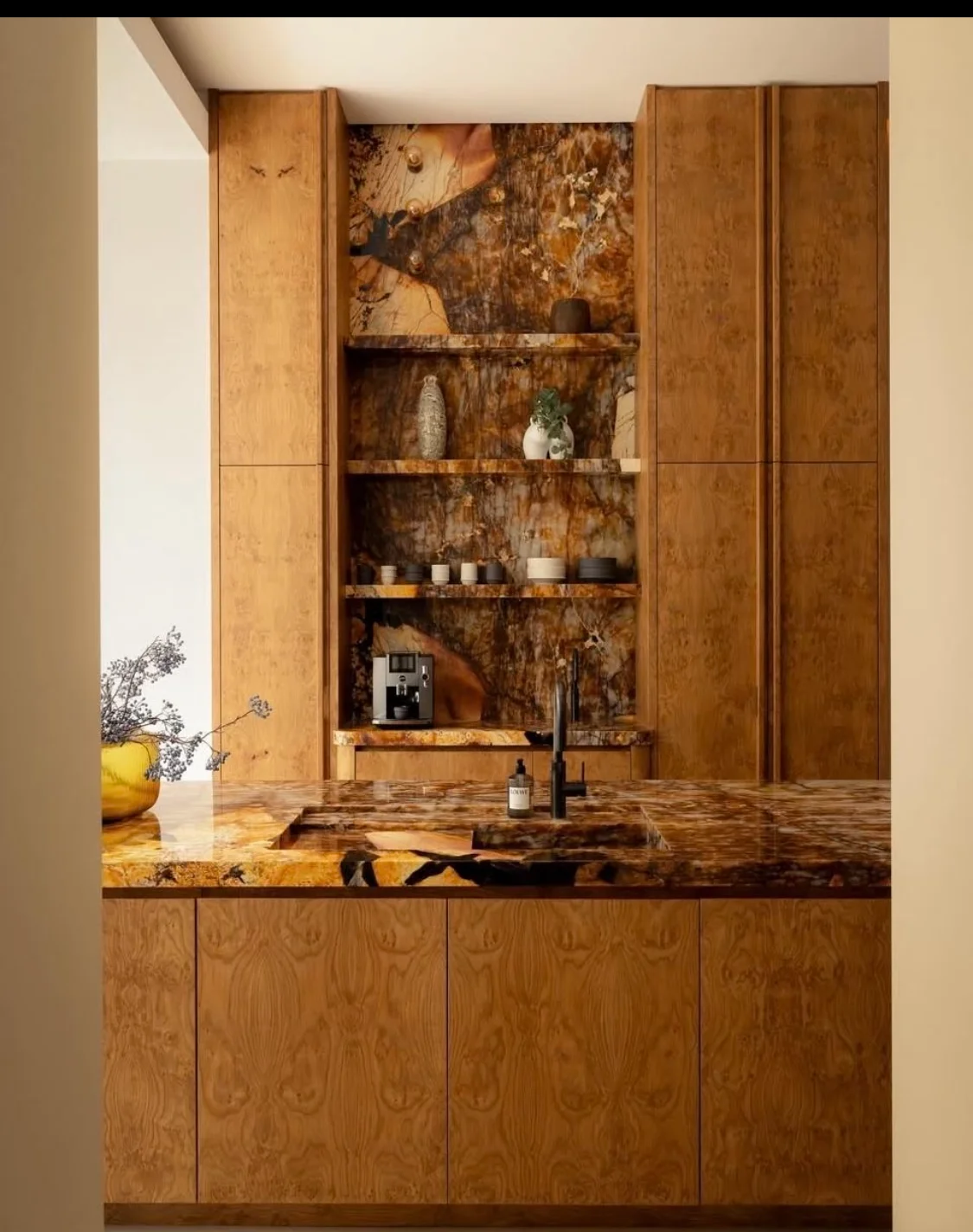
When burl figure meets strong stone veining, area, tone and edges establish hierarchy. The image illustrates warm tonal coordination, not proof that doors, worktop and backsplash share one material. Compare actual samples together.
Accent walls and mirrors: space around the figure
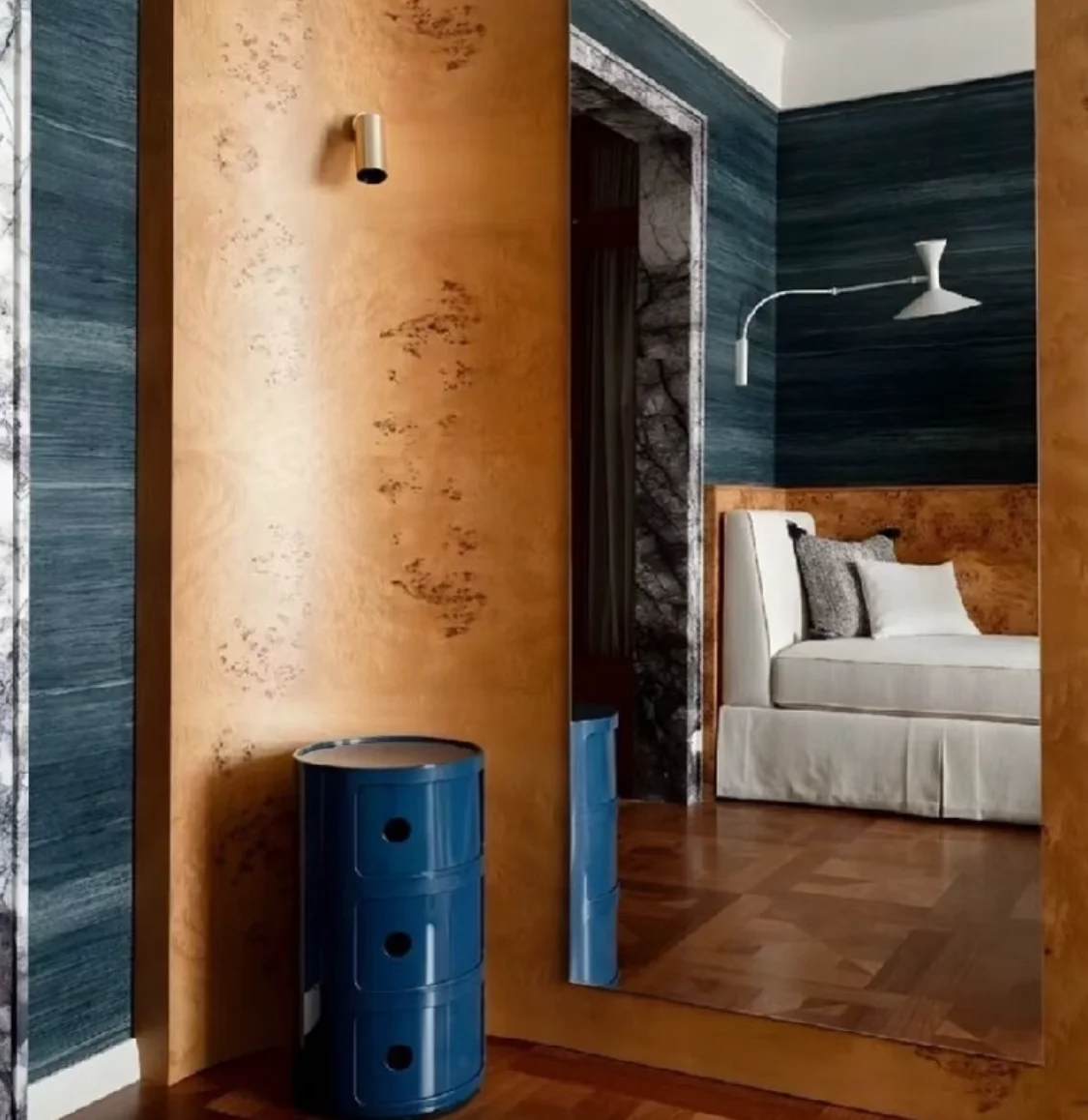
A wall section, mirror surround or cabinet can make figure a focal point against quieter adjacent materials. There is no universal maximum coverage rule: room scale, light and figure density should guide the decision.
Table detail: reading swirls and eyes up close
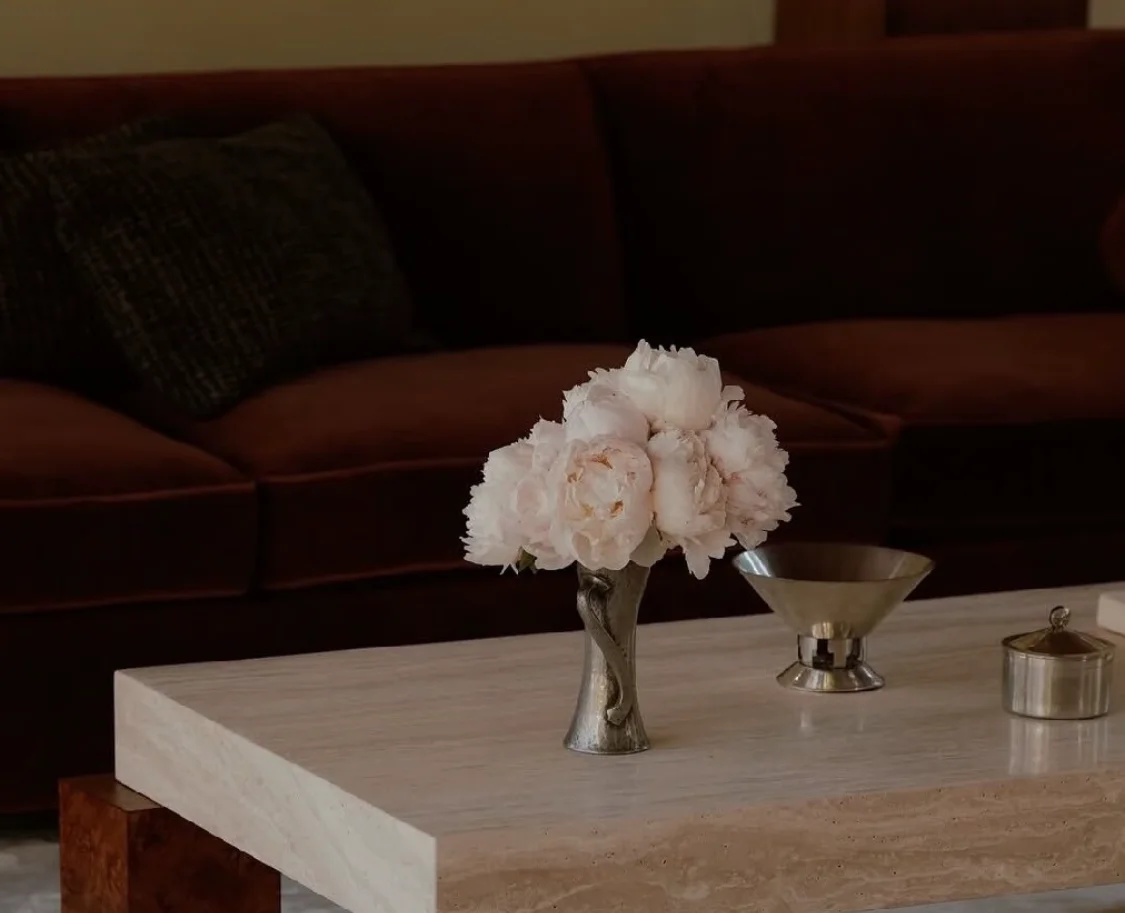
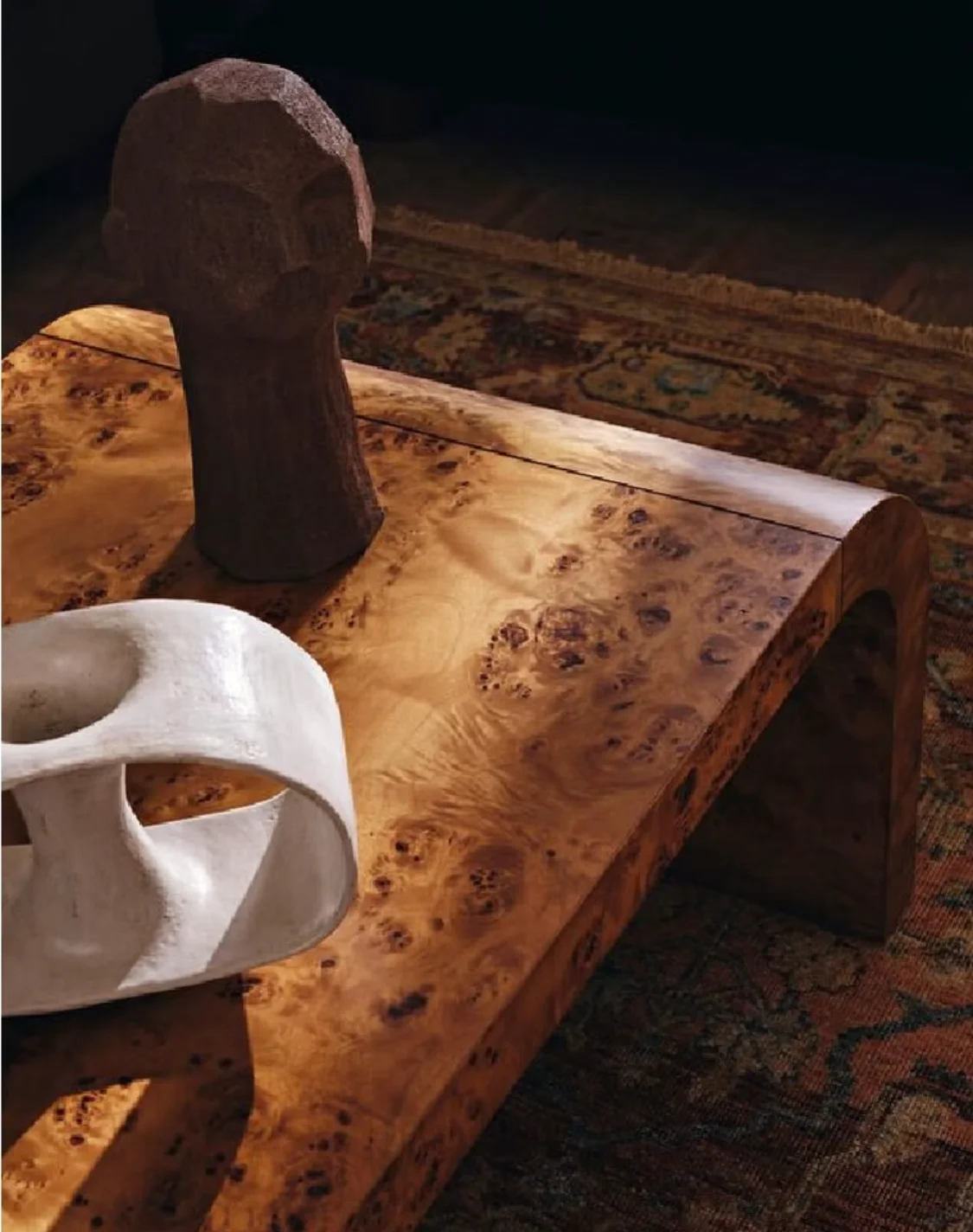
This cropped view contrasts a pale stone-coloured top with darker burl-figured components. Colour, sheen and viewing distance affect depth. Stone species, supporting structure and surface process cannot be identified reliably from this photograph.
Light and dark samples: verify material first
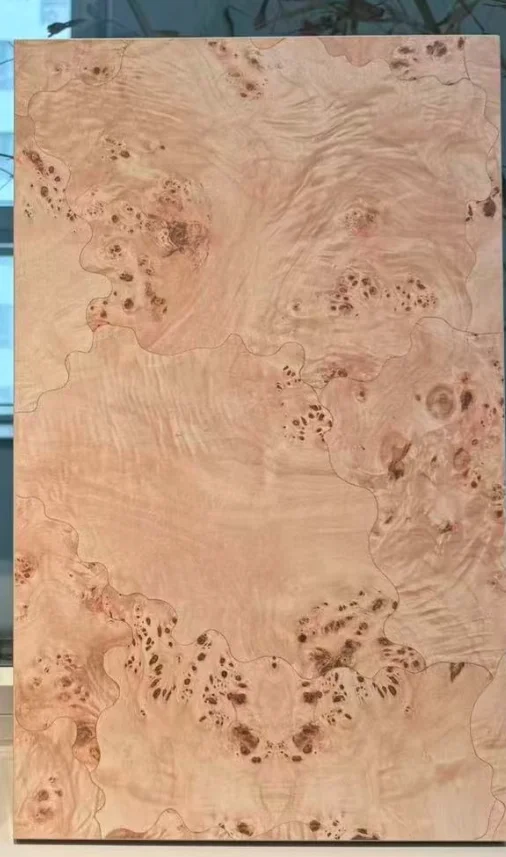
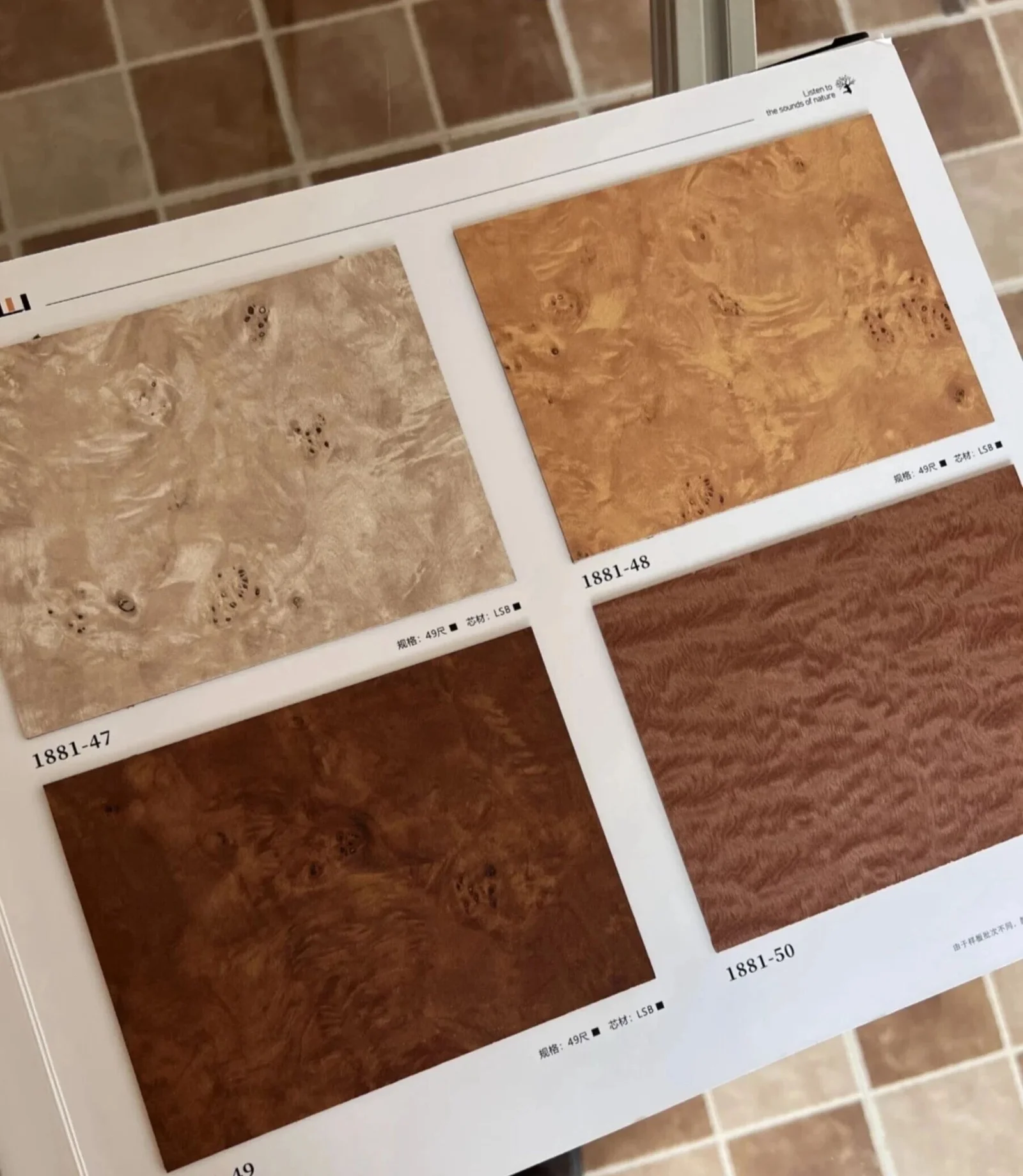
Samples vary in tone and eye density, but photographed labels do not establish scientific species, origin or process. Trade names should be accompanied by a precise material identification. Dark brown colour alone does not identify black walnut burl.
Desks and cylindrical forms: figure follows shape
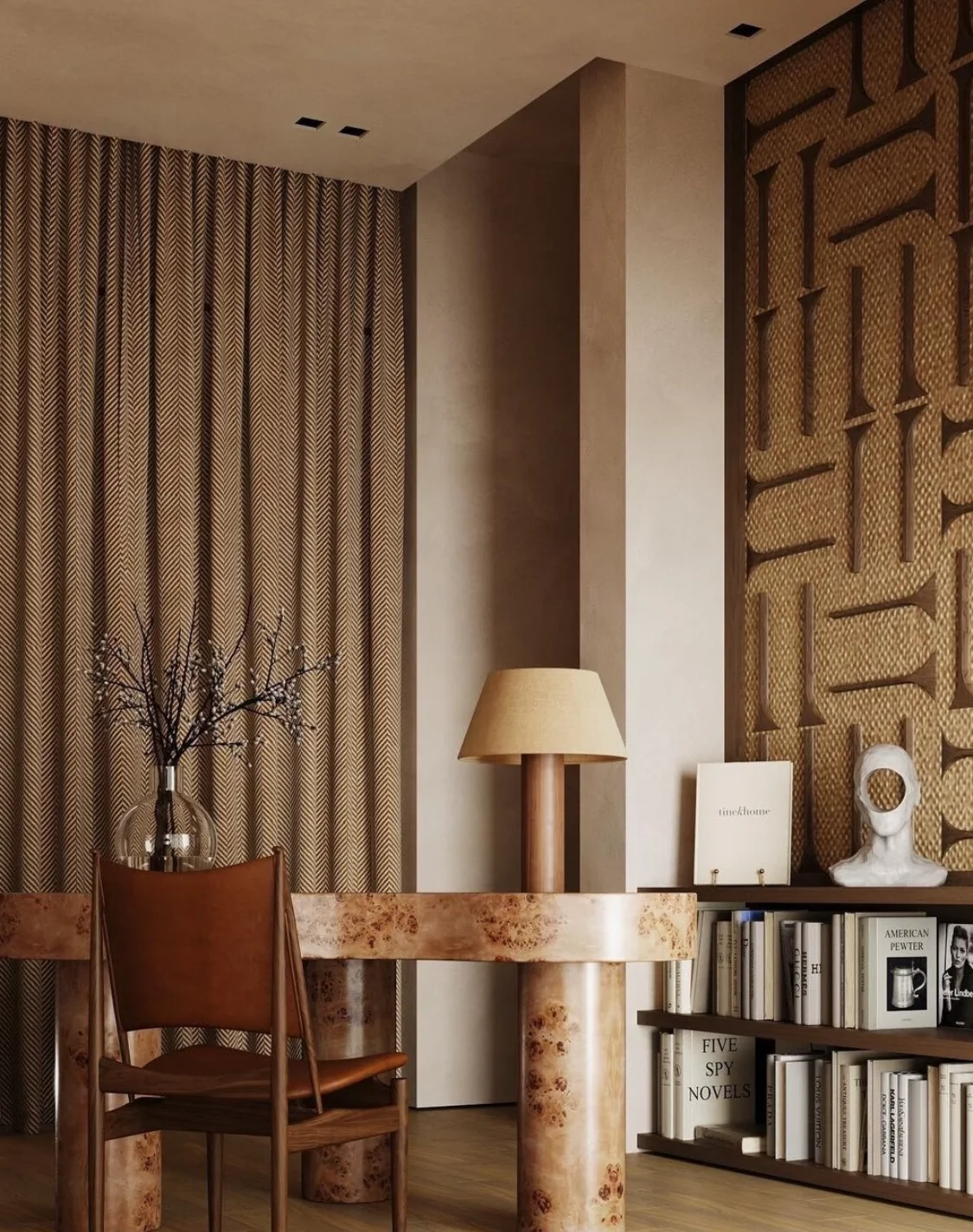
Cylindrical components allow figure to wrap around a form, but their appearance does not prove solid-burl construction. Verify curved veneering, seam position and edge treatment with the fabricator. Refinement comes from the relationship between shape, scale and figure.
Sampling, matching and care
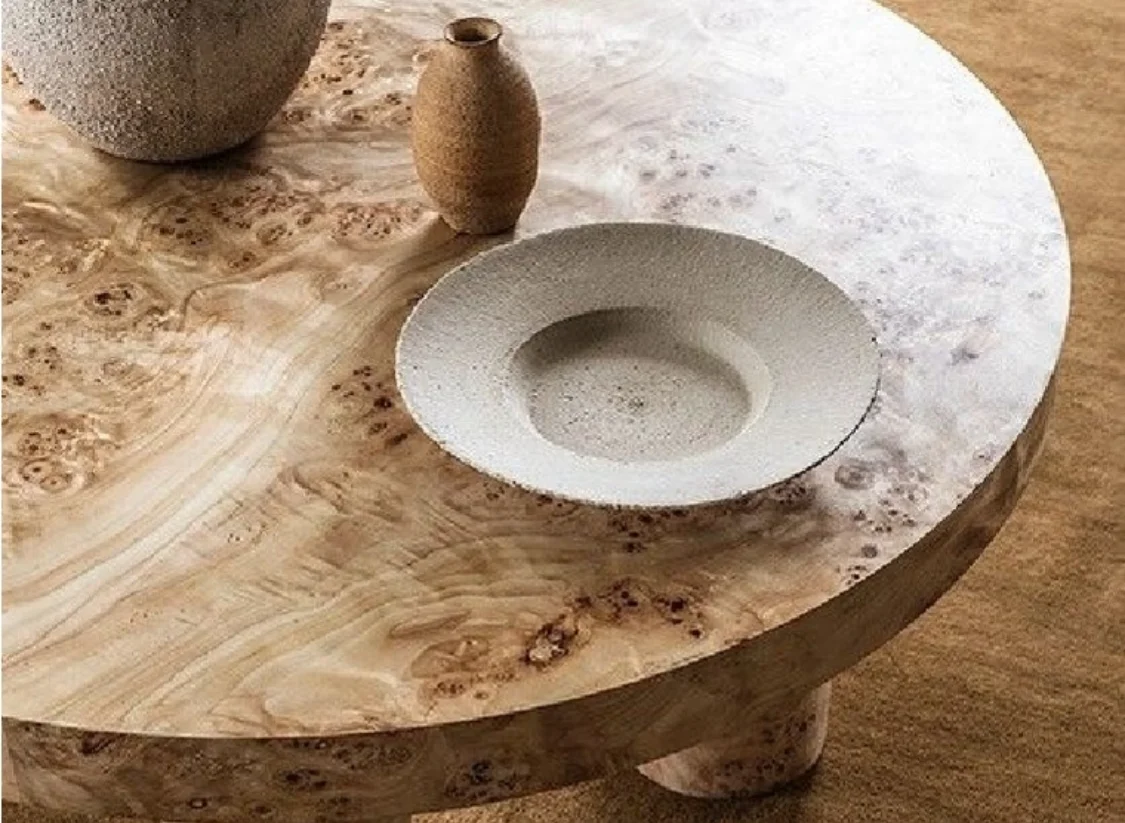
Burl veneer can have small leaf sizes and complex grain. Check fissures, eyes, repairs, thickness, backing and usable dimensions. Approve the complete layout, matching, reverse face and edges. Bookmatching can produce mirrors and differences in light response. The round-table detail illustrates design rather than structure. Judge colour and sheen on finished physical samples. Limit strong prolonged sunlight, standing water, direct heat and abrupt moisture changes; follow the coating supplier’s cleaning instructions. A finish cannot guarantee permanent colour.[2][3]
Related design guides
Supplied images are material and interior-design references. Species, natural or reconstituted construction, substrate and project ownership are not established from photographs; these are not presented as delivered KUNSUN projects.