
Six Common North American Black Walnut Grain Patterns
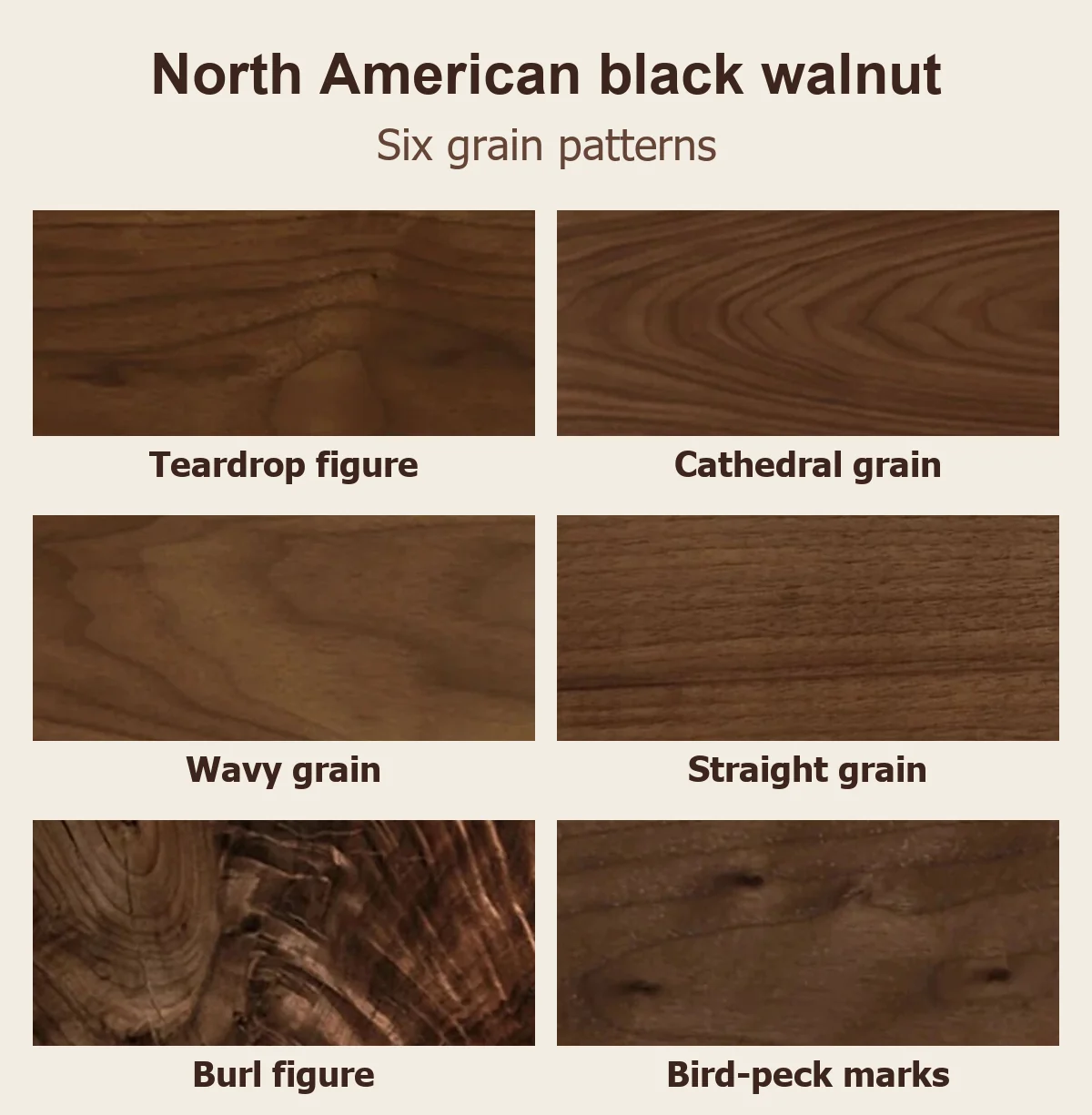
To read North American black walnut (Juglans nigra), look at the direction of the lines, whether the curves close around a center, and whether you see local spots or swirls. This guide compares six appearances: teardrop, cathedral, straight, wavy, bird-peck marks and burl. Several can appear on the same face. These visual terms alone cannot establish hardness, density or grade.
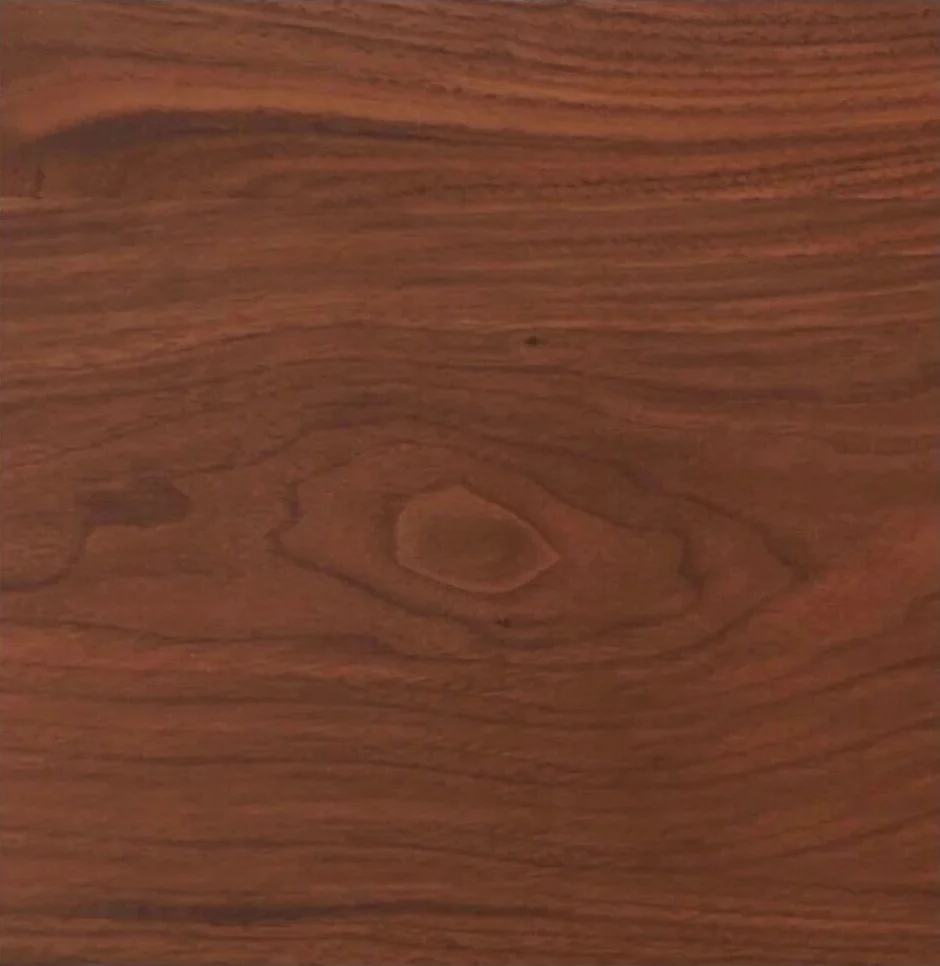
Teardrop figure
Look for lines closing around an oval or droplet-shaped center. It gives the eye a clear focal point. On a drawer front or narrow door, check where that point will fall after trimming.
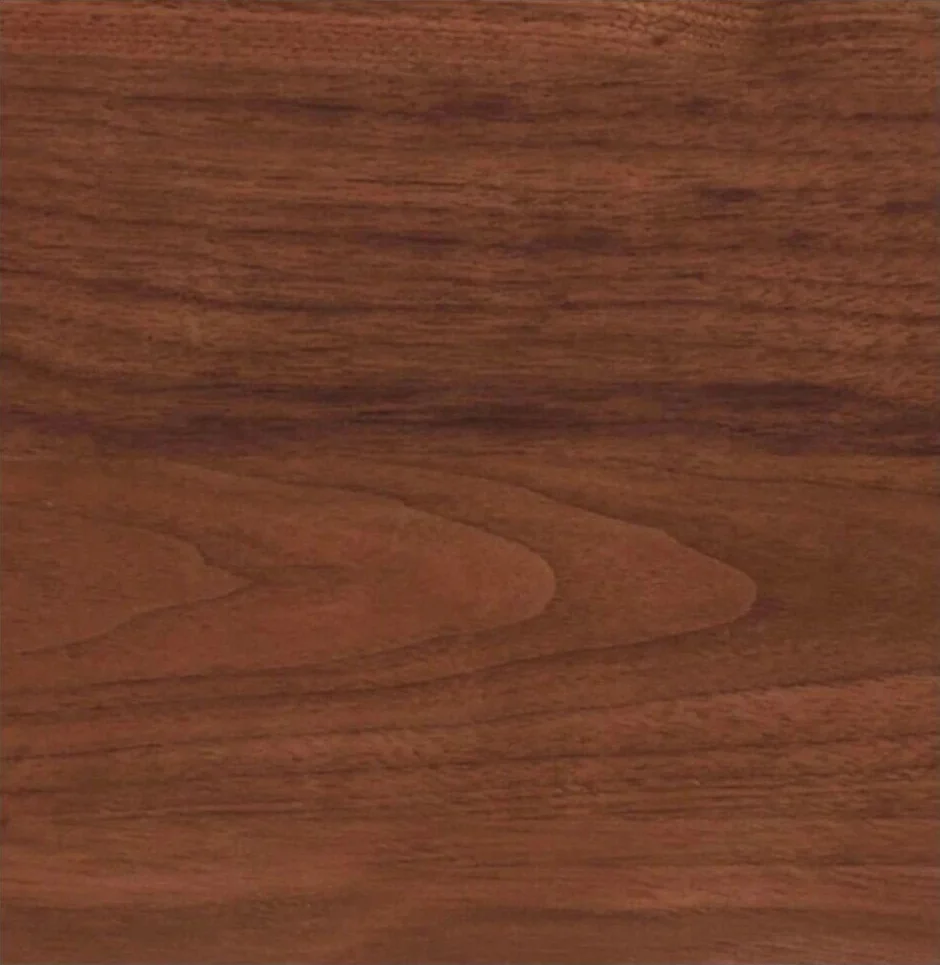
Cathedral grain
Look for a series of pointed arches, one opening out from the next. Plain-sliced veneer often shows cathedrals, sometimes alongside straighter grain on the same leaf. On a wide door, choose where the main arch should sit and which way it should point.
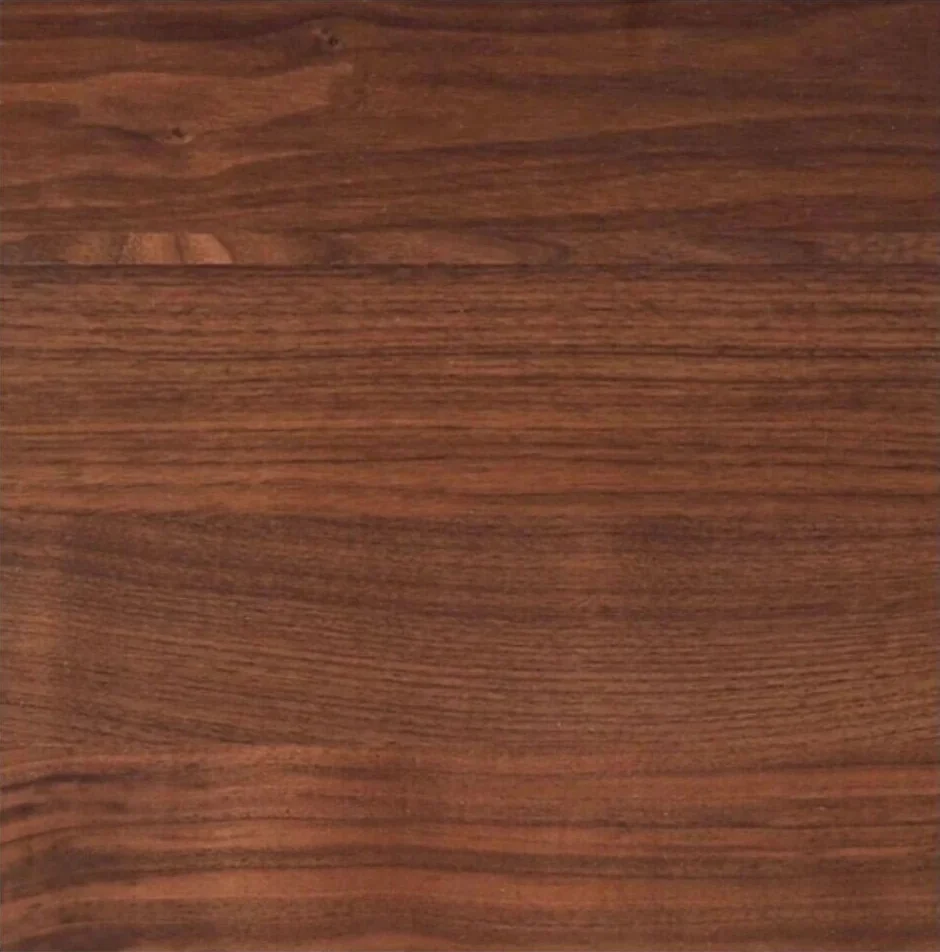
Straight grain
Most lines run in the same direction with little variation. Quarter slicing tends to produce a linear appearance. Check the actual leaves and lay out adjacent tall doors or wall panels to see how the lines carry across the joints.
Wavy grain
Follow the repeated rises and falls of the lines along the face. Unlike a teardrop figure, the curves usually keep moving without closing around a center. View the sample at normal distance under the intended lighting.
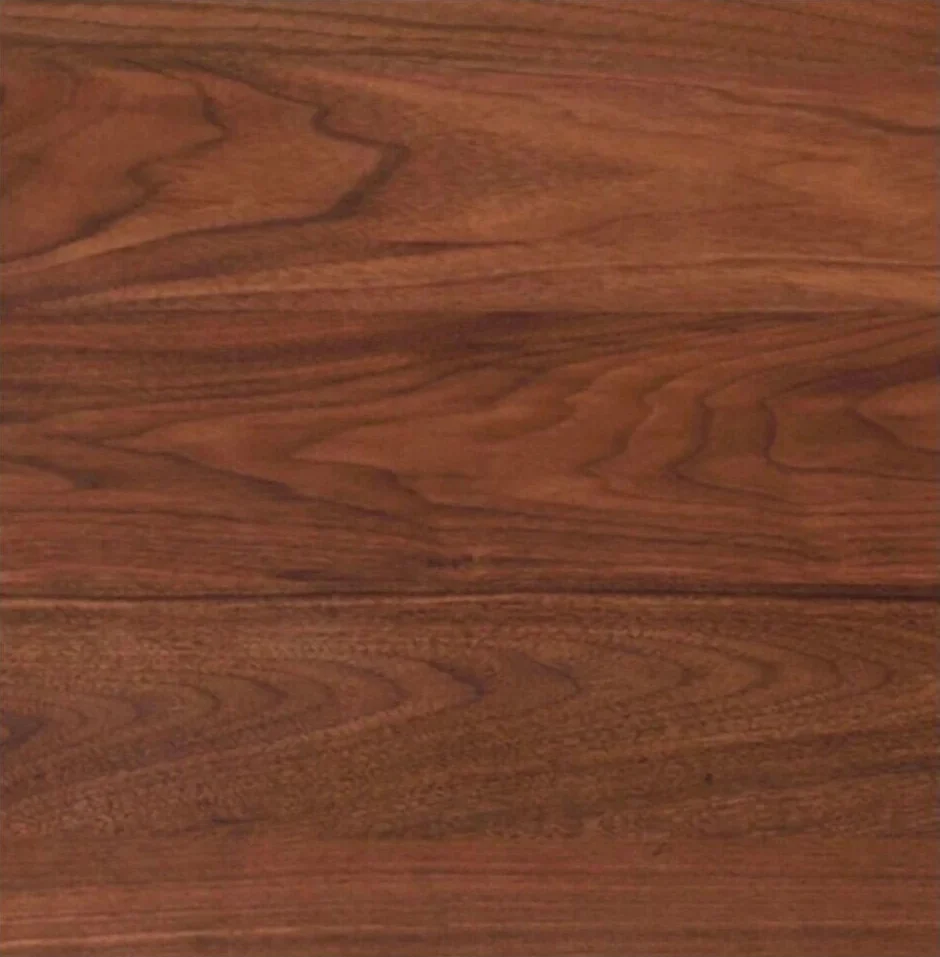
Bird-peck marks
This reference shows small dark spots with the nearby grain bending around them. The label describes what is visible here. A photo alone cannot establish the cause or identify a sound knot. Agree on allowable size, frequency, location and open spots during sample review.
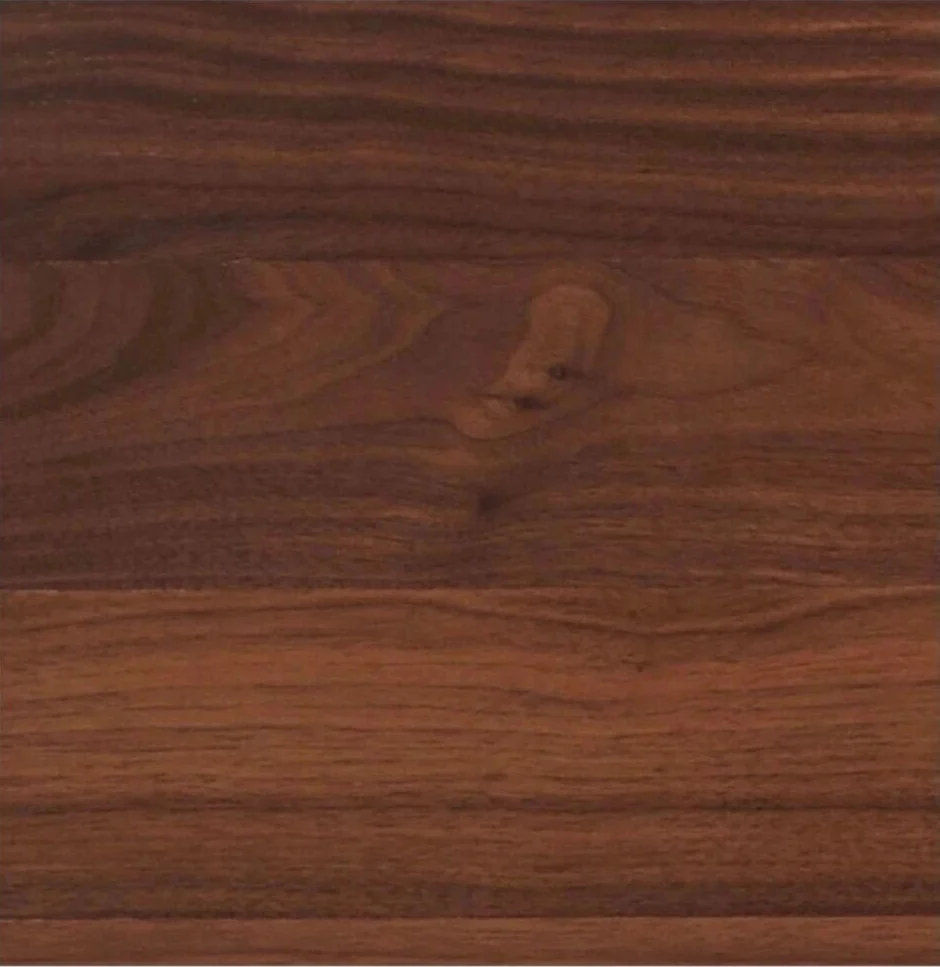
Burl figure
Irregular grain in a burl can produce tight swirls and small, uneven eyes. It can draw attention to a cabinet inlay or other small accent. Confirm the actual veneer, usable sheet area and face condition before specifying burl.
How do you choose between straight and cathedral walnut veneer?
Start with straight grain for a continuous, quiet surface. If you want a focal point on a door or tabletop, lay out cathedral leaves at finished scale and choose where the arch will land.
What should you confirm before ordering black walnut veneer?
Provide the finished dimensions and grain direction. Agree on usable sheet area, cut, matching, allowable marks and color range. Review sequential leaves from the same lot with the planned layout and finish.
Related veneer and matching guides
References
Reference images supplied from the WeChat account “80后室内设计师-竞慧”. Close-ups illustrate the patterns. Use actual samples for purchase and acceptance.