
Why Does Solid Wood Furniture Have Colour Variation?
Solid wood furniture varies in colour because of natural differences in the wood, grain and sawing direction, processing, finishing, and exposure to light over time. Boards of the same species, even from one log, need not match. Natural variation does not excuse every colour anomaly: material variation, manufacturing defects and service damage must be assessed separately against agreed samples and requirements.
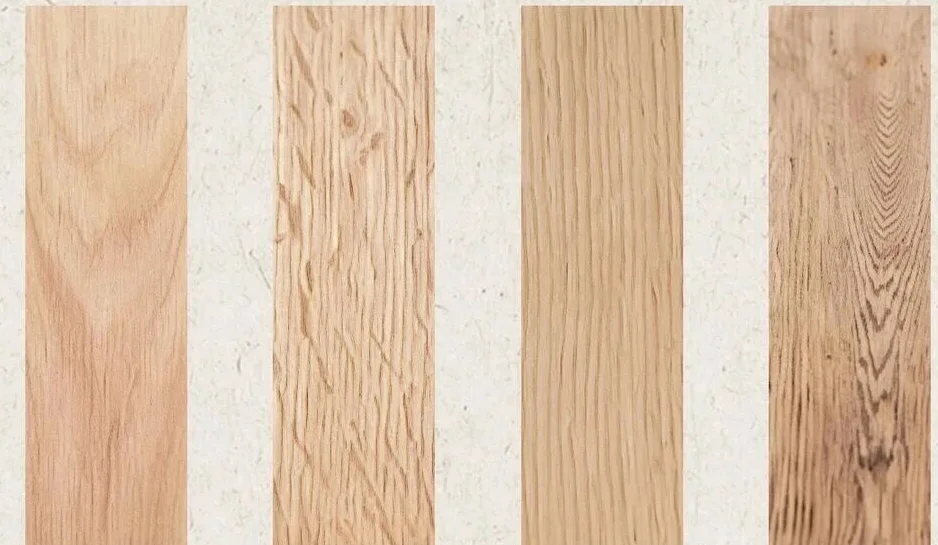
1. Where does colour variation come from?
| Cause | Mechanism | Typical appearance | What to check |
|---|---|---|---|
| Natural material | Species, individual trees and wood zones differ chemically | Tonal changes and heartwood/sapwood contrast | Species, colour selection, sapwood allowance |
| Grain and viewing direction | Cut surfaces and fibres reflect light differently | Brightness changes as the viewing angle changes | Compare under consistent lighting from several directions |
| Board assembly | Strips differ in colour, grain and absorption | Bands across a glued top | Approved layout and colour range |
| Drying and preparation | Drying conditions, moisture state, sanding and residues affect appearance | Local stains or uneven absorption | Processing marks and unusual patches |
| Finishing | Stain uptake, film thickness, tint and gloss differ | Uneven tone, lap marks, repair outlines | Fully finished batch sample |
| Light and ageing | Wood and coating change during exposure | Covered marks and old/new mismatches | Exposure history, species and coating |
2. Why do heartwood and sapwood differ?
Heartwood is the inner zone that no longer performs the main water-conducting role; the outer sapwood participates in transport. Chemical changes during heartwood formation, including extractives, can create a visible contrast. North American black walnut is a familiar example: pale sapwood contrasts with brown heartwood.[1][2]
Not every species follows an identical dark-heartwood/light-sapwood rule. Colour alone cannot identify species reliably. Sapwood is not automatically defective: specify where it is allowed and how much. Selected heartwood may suit a uniform visible face, while deliberate contrast may suit another design. Colour selection and structural quality are separate assessments.
A board's colour cannot reliably reveal whether it came from the sunny or shaded side of a tree. Growing conditions can influence wood, but that simple explanation is not a general diagnostic rule.
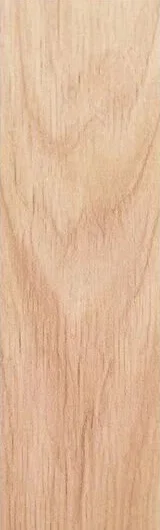
3. How do sawing and grain direction change appearance?
Flat or tangential faces commonly show cathedral-like figure; radial faces tend toward straighter figure, with prominent rays in some species. Quarter sawing is a conversion method, not a guarantee that every board has identical ring angle or appearance.[1]
The supplied graphic's claim that flat sawing produces straight figure and radial sawing produces large cathedrals should not be repeated. Log shape, position and fibre direction also matter. Wood reflects light directionally: neighbouring strips can look alternately bright and dark despite similar base colour. Change the viewing angle before diagnosing uneven staining.
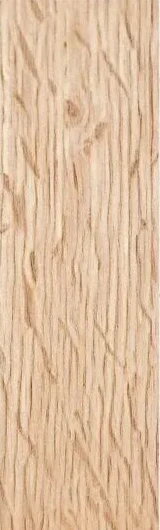
4. Why are bands visible across a glued top?
Wide tops and doors often combine several boards. Pieces from different trees or positions in one log can differ in colour, grain, sapwood and stain response. Sorting improves coordination but cannot make same-species or same-batch wood identical. Approve a full face or a multi-board assembly rather than one unusually uniform small sample.
Natural veneer can behave similarly. Sequential slicing, matching and fibre direction affect adjacent leaves; bookmatching can produce alternating brightness through directional reflection. Assess veneer, substrate and finish together rather than treating a veneered panel as a solid slab.[1]
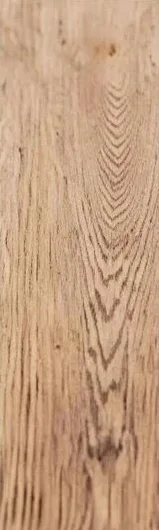
5. Can drying, sanding and finishing create colour differences?
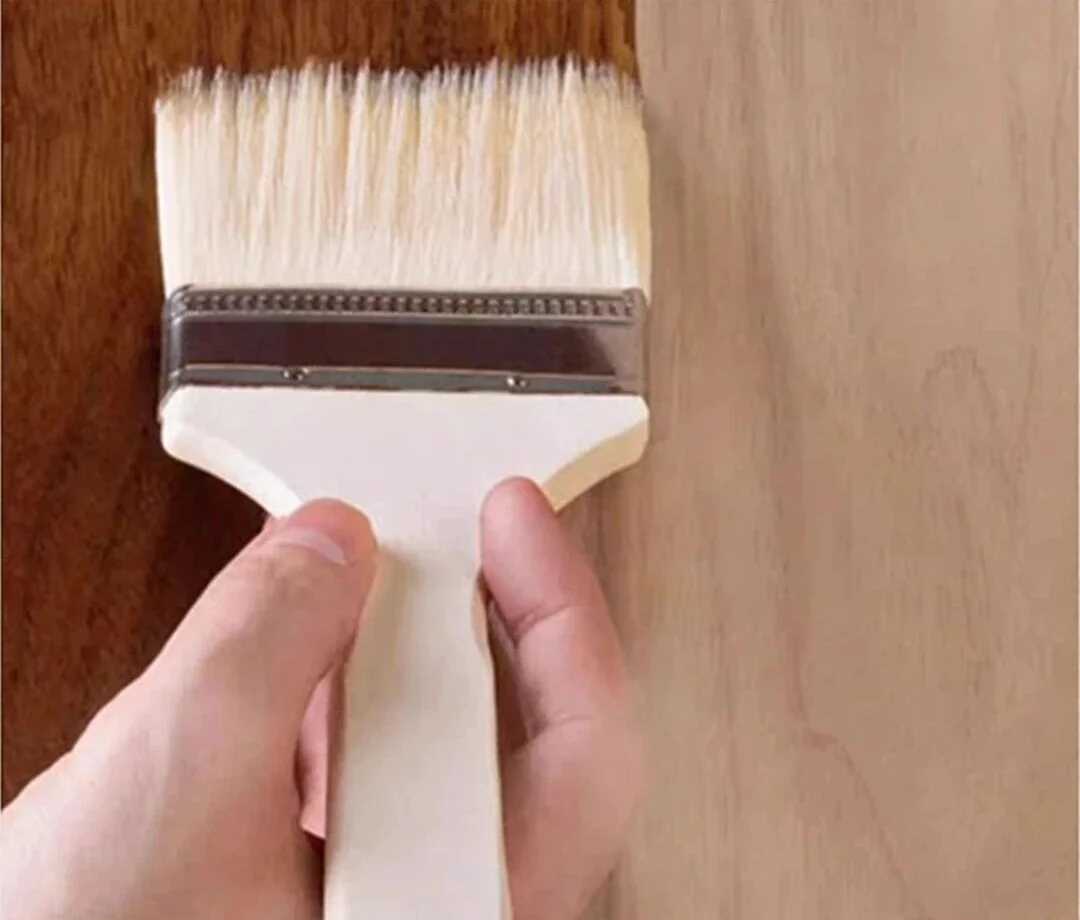
Yes. Poor drying can discolour wood. Unequal sanding, glue residue or contamination can affect stain absorption and the finished appearance. End grain, earlywood, latewood, knots and changing fibres need not take stain equally. Coating tint, thickness, gloss and toning also influence the result.[1][3]
Do not explain every finish defect as natural absorption. Pronounced lap marks, missed areas, repair outlines, whitening, bubbles or delamination warrant investigation. Moisture control matters, but a photograph's darker or lighter tone cannot establish whether moisture content is acceptable.
6. Does wood always become darker with age?
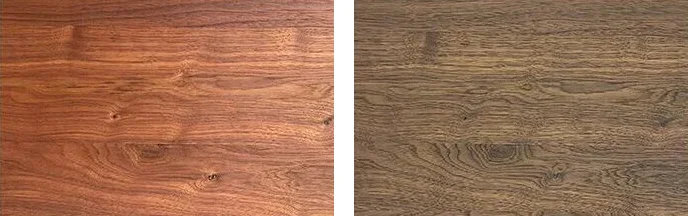
No. Change depends on species, light source, intensity, duration and coating. Wood may darken, lighten or shift hue; the coating may change too. Calling all ageing simple oxidation that always darkens wood is inaccurate.[3][4]
American cherry heartwood commonly darkens with exposure, but this cannot be generalised to all woods. Covered areas and locations near windows can develop differently. Do not use intense sun exposure to equalise colour: sapwood and heartwood are not guaranteed to converge. Avoid strong direct light and follow finish-care guidance; check the actual aged surface before repairs or additions.
7. Natural characteristic or a reason to investigate?
Variation may be acceptable when it follows grain, board layout or heartwood/sapwood distribution, changes with viewing direction while the finish remains sound, and falls within approved range samples. New and old components can differ where exact matching was not promised.
Investigate colour outside the agreed range, water marks, mould-like or spreading dark patches, whitening, bubbles, peeling, missed coating and obvious toning repairs. Also check whether species, sapwood limits or material substitutions breach the agreement. A photograph alone cannot distinguish fungal, chemical, metal-contact or finish-related staining. Natural variation does not override agreed appearance, and strong variation alone does not prove counterfeit material.
8. A practical colour-acceptance procedure
- Specify species, solid or veneered construction, visible locations, sapwood limits and matching method.
- Use bare wood to review natural colour and fully finished, appropriately conditioned samples to approve delivery appearance.
- Agree a range using assembled panels or light/medium/dark limit samples rather than one target point.
- Standardise light source, viewing distance, direction, background and surface cleanliness; check project lighting when relevant.
- Record batches and component positions. Coordinate matching sets and reassess actual furniture when reordering.
- If using a colour instrument, agree the difference formula, illuminant, observer, geometry, aperture, measuring locations, averaging and specular inclusion. Grain and gloss affect readings; no universal ΔE pass limit applies to all solid wood furniture.
Phone images are affected by white balance, exposure, filters, displays and ambient light. They document locations but are not precise colour standards. Instrument readings also cannot replace evaluation of the complete board layout.
Frequently asked questions
Does colour variation mean poor quality?
Not necessarily. Separate natural colour, directional reflection, manufacturing differences and damage, and compare with the approved samples and contract. Neither automatic rejection nor automatic acceptance is justified.
Will sun exposure make pale sapwood match heartwood?
There is no guarantee. Their chemistry and starting colour can differ, and exposure need not move both toward the same result. Do not use sunbathing as a matching treatment.
Does one log guarantee identical colour?
No. Different positions can have different colour, grain and sapwood proportions, and processing adds further variables.
Does uniform colour prove veneer or imitation wood?
No. Sorting, layout, staining and opaque coatings can improve uniformity, while natural veneer can vary greatly. Establish construction from specifications, sections and contract documents.
Can a replacement door perfectly match an old one?
Trial against the actual old door. Substrate, finish and exposure histories may differ; even a close initial match does not guarantee identical future ageing.
Related materials and technical reading
Products are material-selection references, not the furniture pictured. Veneered panels and solid wood have different constructions; confirm specifications and colour with samples.
References
General technical guidance. Illustrations are not controlled experiments, colour measurements or evidence of Kunsun stock.